

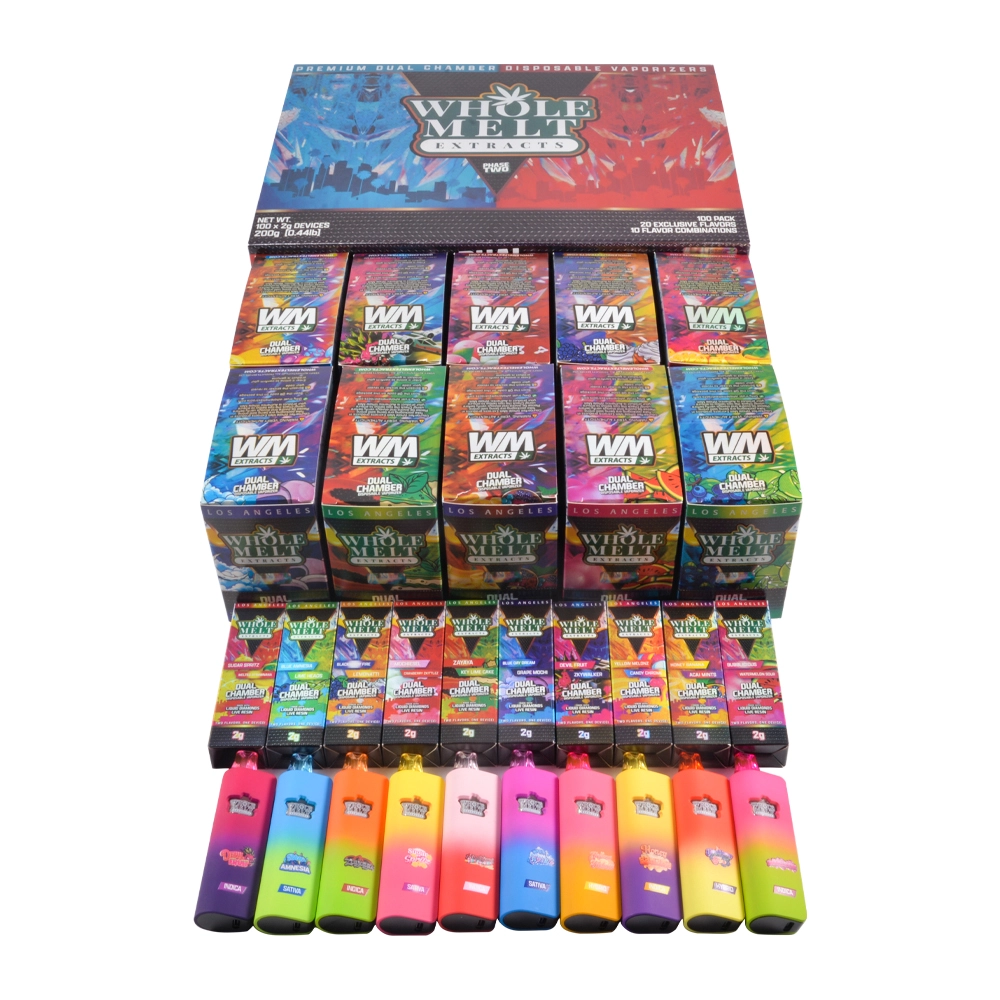
Whole Melt Dual Chamber Vape Review
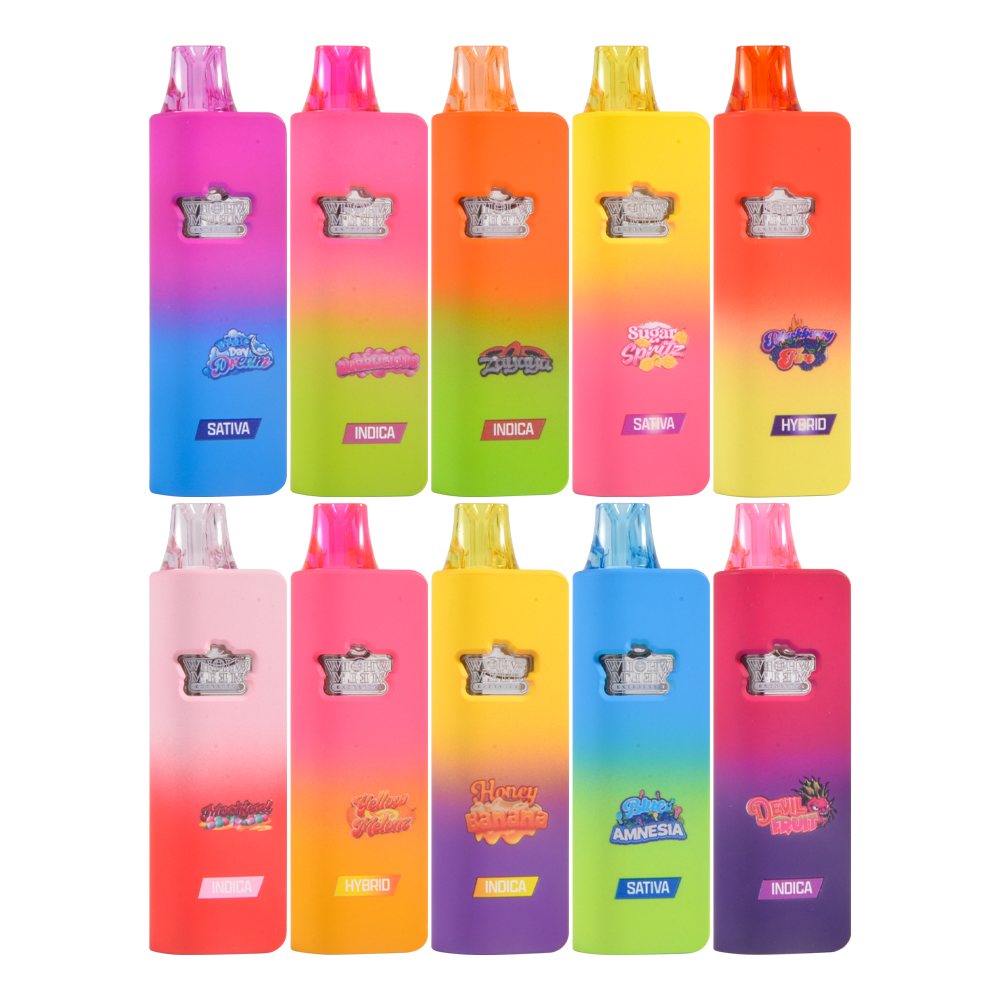
What a “dual chamber” Whole Melt vape actually is
A dual-chamber disposable is a “two-in-one” device: the body contains two separate internal reservoirs (commonly split as 1ml + 1ml within a 2ml total capacity), and the user can usually choose: Chamber A, Chamber B, or a blended mode depending on the hardware version.
This format is popular because it adds variety without forcing people to carry two devices—and for shops, it can simplify merchandising: one hook can represent two flavor profiles.
Specs at a glance (and why they matter)
Why specs matter more on dual-chamber devices
Dual-chamber hardware adds complexity (two reservoirs, selector logic, more internal flow paths). That means the usual “disposable QC basics” matter even more: coil consistency, chamber balance, intake sizing, and selector reliability.
| Spec | Typical listing / guidance | Why users notice it |
|---|---|---|
| Total capacity | 2.0ml total (commonly split into two chambers) | If one chamber feeds slower, users report “one side hits, the other doesn’t.” |
| Battery | Rechargeable (example listing shows ~310mAh) | Low voltage under load can look like “dead chamber,” especially if the selector is in blend mode. |
| Coil / resistance | Ceramic core commonly around ~1.2–1.4Ω; listings may show ~1.4Ω | Higher resistance tends to feel “smoother,” but users may want stronger warmth; inconsistency triggers complaints. |
| Intake sizing | Multi-hole intake; example listing shows 4 × 1.6mm | Too small = dry/weak pulls; too large = flooding or spitback. Dual-chamber amplifies mismatch issues. |
| Selector | Button or switch (varies by version) | User confusion here is the #1 “it’s broken” moment—often it’s just in the wrong mode. |
Tip: On dual-chamber devices, your “spec sheet” should be paired with a short one-page “how to switch modes” card. It reduces returns more than almost any other insert.
What real users like (recurring themes)
1) Variety without carrying two devices
Users consistently react well to the ability to change the “vibe” mid-session—especially when flavors are distinct enough that A and B feel meaningfully different.
2) “Daily driver” expectations: simple, predictable hits
In community discussions, the most positive comments focus on consistency and ease—people don’t expect miracles; they want reliable pulls, decent flavor, and a device that doesn’t fight them.
3) Perceived value (two profiles in one SKU)
Even skeptical users often agree the dual format is interesting and “worth trying” because it feels like added value. For retailers, that translates into a cleaner “upgrade story” versus a standard single-flavor disposable.
4) The “blend mode” idea (when it actually works)
When the blend mode functions as expected, users treat it like a signature feature. But it’s also the mode most likely to surface imbalance issues—so QC matters.
What real users dislike (recurring themes)
A) Flavor-switching confusion gets mislabeled as “broken”
A common real-world pattern: the user can preheat or power on the device, but can’t figure out how to switch sides. That confusion escalates quickly into negative sentiment—even if the hardware is fine.
B) “One side doesn’t work” complaints
Another recurring theme: one chamber fires normally while the other appears to be dead (or the device shows a different indicator) and blend mode fails. Whether it’s a selector issue, chamber imbalance, or an internal contact problem, users experience it as “half my device is unusable.”
C) Authenticity skepticism
Public threads frequently include “real vs fake” arguments, with some users claiming the brand is heavily counterfeited and others saying newer versions are more consistent. Regardless of who’s right, the outcome is the same: buyers want proof (traceability, packaging controls, consistent hardware versioning).
Switching flavors: why people get confused
Based on recent public user posts, the confusion usually comes from one of two design patterns:
- Button-driven selector: users report needing to “wake” the screen/device, then tap again to change sides. They often try multi-click patterns (2–5 clicks) and assume it’s broken when nothing changes.
- Physical switch on the bottom: some versions use a small selector switch, which is easy to miss.
Your simplest fix is operational, not technical: include a one-line instruction on the box insert and on the product page: “Tap to wake → tap to switch A/B (or use bottom switch, depending on version).”
Buyer checklist: reduce RMAs and “one-side-dead” complaints
1) Incoming QC (fast, repeatable tests)
| Checkpoint | How to test quickly | Fail signal you’ll see in reviews |
|---|---|---|
| Selector reliability | Cycle A → B → blend 20x on samples; verify indicator changes every time | “Can’t change sides,” “one side doesn’t work,” “blend won’t hit” |
| Chamber balance | Confirm both chambers activate consistently under the same battery state | “Left is weak,” “right is dead,” “half full but won’t fire” |
| Coil consistency | Measure resistance variance on a sample set; flag outliers | “Harsh,” “burnt,” “no vapor unless I pull hard” |
| Airflow & clog tendency | Dry-draw airflow check; inspect mouthpiece seating and internal obstructions | “Clogs instantly,” “hard pull,” “doesn’t hit unless I do tricks” |
| Charge path | USB-C fit, stable charging, no overheating on sample charge cycle | “Won’t charge,” “dies fast,” “acts dead on one side” |
2) Compliance signals buyers ask for (hardware-side)
If you sell or ship battery-powered devices, buyers increasingly expect documentation aligned to recognized safety and transport frameworks:
- Battery transport testing: UN 38.3 is the globally referenced lithium battery transport test framework, and regulators also require a lithium battery test summary in many cases.
- Device electrical safety: UL 8139 is a widely cited standard focused on the electrical systems of vaping devices (battery/charging/heating protections).
- Cell/battery safety standard: IEC 62133-2 is a commonly referenced safety standard for portable sealed lithium cells and batteries.
- Parcel packaging robustness: ISTA 3A is commonly used to simulate parcel shipping stresses for packaged products.
Authenticity & “fake” concerns: how to de-risk
Real users frequently argue about whether Whole Melt products are counterfeited, and that debate alone can hurt conversion. You don’t need to “win” the debate—you need to out-document it.
Best practices that reduce skepticism
- Version clarity: call out the exact hardware version (V7 dual chamber, etc.) consistently across listing, carton, and case labels.
- Packaging controls: tamper-evident seals, consistent print, and batch-level identifiers (where applicable).
- Supplier traceability: keep purchase records and incoming QC logs tied to batch identifiers.
- Retail education: a 30-second “how to switch sides” guide prevents misreturns that become “fake” rumors.
If your audience is still deciding between “filled products” vs “hardware-only” sourcing, make the distinction explicit with your catalog structure. One useful hub for this is: wholesale disposable vapes.
FAQ
Is the dual-chamber format actually better than a standard disposable?
It’s “better” if your customer values variety and convenience. It’s “worse” if they want the simplest possible device with the fewest moving parts. Dual-chamber adds features—and features require tighter QC.
Why do some users say they can’t switch flavors?
Many users simply don’t notice the selector method (button flow vs bottom switch). A one-line quick-start guide prevents most complaints.
What causes “one side doesn’t work” reports?
From a hardware standpoint, it’s usually one of three things: selector/control behavior, chamber feed imbalance, or an internal contact issue. That’s why incoming QC should explicitly test A, B, and blend mode separately—at both full and low battery states.
What’s the best way to reduce returns?
Combine (1) a clearer “how to switch” instruction, (2) a tighter sample test plan, and (3) a documented RMA workflow that tracks whether failures are selector-related, chamber-related, or charging-related.

0 Comments