

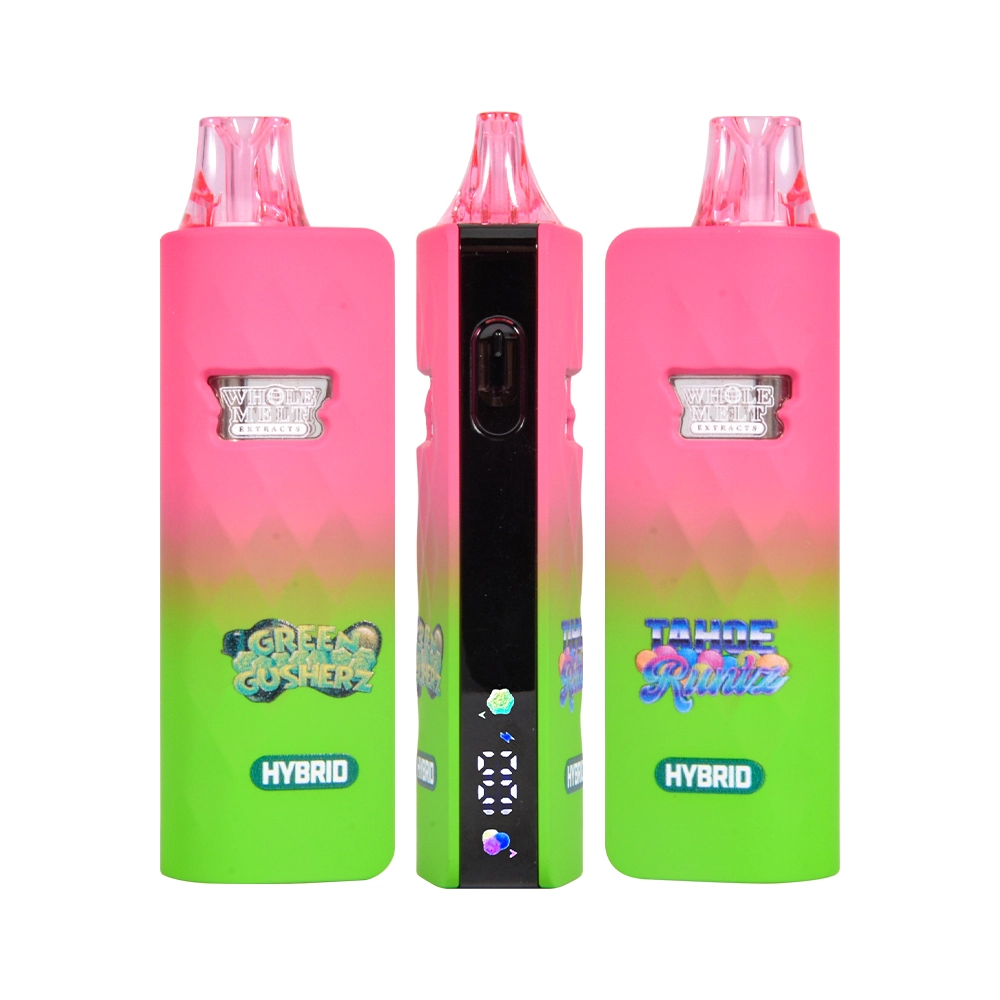
What B2B Buyers Should Review Before Sourcing Whole Melt V8 Disposable Devices
Important: This guide is for lawful, licensed operations and lawful products only. It is not legal advice.
If you are evaluating Whole Melt V8 disposable devices for wholesale, the biggest mistake is treating them like a generic off-the-shelf disposable. A serious buyer should review far more than appearance and unit price. Before you scale a purchase order, you need to confirm what is actually being sold, how the device performs in sampling, what battery and transport documents the supplier can provide, and whether the final SKU fits the rules of the destination market.
On Extractsvape, the current Whole Melt V8 listing is positioned as empty hardware, which means your sourcing checklist should start with device quality, electrical safety, packaging control, and downstream compliance responsibility. If you are building a serious shortlist, it also helps to compare the V8 against your broader whole melt extracts range, current 2 gram disposable vape bulk options, and your wider catalog of wholesale disposable vapes.
1) Confirm whether you are sourcing empty hardware or a finished product
This sounds obvious, but it changes everything. Empty hardware sourcing is mainly a device-quality and logistics decision. Finished-product sourcing adds formula review, packaging claims, labeling exposure, and destination-market compliance. If the offer is for empty hardware only, your main job is to validate battery integrity, chamber consistency, leak resistance, and packaging controls. If the offer includes filled goods, your review has to expand immediately.
Ask the supplier to state clearly on the invoice, packing list, and product spec sheet whether the SKU is empty hardware only or a finished filled product. That one clarification prevents later disputes on customs, warehousing, and liability.
2) Review the core specs that affect sell-through and returns
For B2B buyers, a spec sheet is not just a technical document. It is a return-rate predictor. On the current Whole Melt V8 format, the public listing highlights a 450mAh battery, 2.0ml capacity, 1.4ohm resistance, USB-C charging, and a dual-flavor concept. Each of those points should be reviewed in practical terms:
- Battery capacity: Ask whether the real-world power output stays stable through the usable life of the device, not only at full charge.
- Capacity: Confirm the actual fill tolerance the hardware is designed for and whether overfilling increases clogging or leakage risk.
- Resistance: A stated resistance number is useful only if production variance is controlled. Inconsistent resistance usually shows up later as harshness, weak vapor, or uneven performance.
- USB-C charging: Review charging behavior, overcharge protection, and whether the charging port is mechanically secure after repeated handling.
- Dual-flavor design: Verify that both chambers perform consistently and that switching behavior is intuitive enough to avoid customer confusion and avoidable RMAs.
A supplier who cannot explain how these specs translate into field performance is not ready for a serious B2B account.
3) Ask for battery, electrical, and transport documents before price negotiations go too far
Too many buyers wait until after sampling to ask for compliance paperwork. That is backwards. Battery paperwork should be part of supplier qualification, not an afterthought. Before you move from inquiry to larger-volume negotiation, ask for:
- UN 38.3 battery test summary
- Battery specification sheet and cell traceability information
- Charging and protection-circuit details
- Leak, drop, and vibration test results if available
- Any third-party electrical safety evaluation tied to the device platform
For buyers who want a tighter risk screen, it is reasonable to ask whether the device platform has been evaluated to recognized electrical-safety frameworks relevant to vaping devices, or whether the supplier can provide equivalent third-party evidence for the battery and charging system. Even if your market does not require a specific certification on the finished device, good documentation reduces freight risk, customs friction, and post-sale dispute exposure.
4) Sample for dual-flavor performance, not just cosmetic quality
The Whole Melt V8 format is attractive because it gives buyers a more premium two-in-one story, but dual-format devices are less forgiving than simple single-chamber hardware. That means your sampling plan should test how the device performs, not only how it looks on arrival.
At minimum, your pre-PO sample test should review:
- Activation consistency across both sides or both flavor paths
- Airflow consistency from sample to sample
- Draw resistance after repeated use
- Leakage during transit simulation and standing storage
- Charging consistency and heat behavior during recharge
- Any weak-side, dead-side, or imbalance behavior that could trigger returns
If you only test one or two showroom-perfect samples, you are not testing the shipment. You are testing a sales presentation. Serious buyers should sample across multiple units from the same batch and record defects in a simple pass/fail sheet.
5) Review the legal pathway for the destination market
This is the part many buyers still underestimate. If your route to market touches U.S. nicotine channels, regulatory enforcement has become harder to ignore. Buyers should confirm whether the exact finished product is lawfully marketable in the destination market before committing inventory. If you are sourcing empty hardware only, the review is different, but you still need a clear internal compliance path for what will eventually be paired with that hardware.
In practical terms, B2B buyers should separate sourcing into two questions:
- Is the device itself acceptable for the intended channel?
- Is the final finished SKU lawful to market, import, or distribute where it will be sold?
If you are supplying lawful nicotine channels in the United States, regulatory review should happen before the PO, not after the container lands. If you are operating in hemp or cannabis channels, rules can vary by jurisdiction, so packaging, marketing claims, labeling language, and age-restricted sale controls all need review under local law.
6) Audit packaging quality and anti-counterfeit controls
For a product like Whole Melt V8, packaging quality is not only a branding issue. It is also a trust and traceability issue. When packaging is inconsistent, buyers end up fighting avoidable disputes over authenticity, version control, and batch identification.
Ask the supplier to show you:
- Current carton and inner-box artwork
- Batch or lot coding method
- Any tamper-evident features
- Master-carton labeling format
- Version naming conventions used across product page, box, and case labels
Your goal is simple: every unit should be easy to trace back to a batch, and every carton should match the approved commercial version. If a supplier is loose on packaging control, they are often loose on incoming components and line consistency too.
7) Lock down commercial terms that protect margin after the sale
Even a good-looking device can become a bad buy if the commercial terms are weak. Before sourcing Whole Melt V8 at volume, review the business terms with the same discipline you apply to the hardware itself.
- MOQ and price breaks: Make sure your first commercial run is sized for validation, not ego.
- Warehouse origin: Confirm whether stock ships domestic or cross-border and how that affects lead time and customs risk.
- Defect allowance: Define what failure rate triggers replacement, credit, or refund.
- RMA process: Get the after-sales workflow in writing.
- Lead time: Ask whether lead time changes when packaging or custom work is involved.
- Version stability: Confirm the supplier will not swap internals or materials without notice.
The cheapest quote is rarely the cheapest landed outcome. A slightly higher unit cost with better traceability and cleaner replacement terms often produces the better margin over time.
8) Use a simple pre-PO scorecard
Before approving a volume order, score the supplier against one short checklist:
- Product identity clearly stated as empty hardware or finished product
- Current spec sheet matches the listing and carton labels
- UN 38.3 battery documentation available
- Battery and charging behavior tested on real samples
- Dual-flavor performance verified on both sides
- Packaging and batch coding reviewed
- Destination-market compliance path confirmed
- RMA, replacement, and lead-time terms agreed in writing
If the supplier cannot clear those checkpoints, the buyer is taking preventable risk.
Bottom line
Whole Melt V8 can be an attractive B2B device format, but smart sourcing starts with discipline, not hype. Review the hardware identity first, then the battery and transport documents, then the dual-flavor QC, then the market-compliance pathway, and finally the commercial protections that defend your margin after delivery.
That order matters. When buyers skip it, they usually discover the real cost later in customs delays, uneven performance, and replacement claims. When buyers follow it, they turn a promising device into a repeatable, lower-risk SKU.
FAQ
Is Whole Melt V8 best treated as a hardware buy or a finished-product buy?
If the listing is for empty hardware only, treat it first as a device-quality and battery-documentation decision. If the offer includes filled goods, expand your review to formulation, labeling, and destination-market compliance.
What documents should a serious supplier send first?
Start with the product spec sheet, battery documentation including UN 38.3 support, packaging visuals, batch-traceability details, and written replacement terms.
Why is sampling still necessary if the supplier already sent specs?
Because the market does not return spec sheets. It returns real devices that leak, clog, misfire, or perform unevenly. Sampling is where paper claims meet reality.
0 Comments