

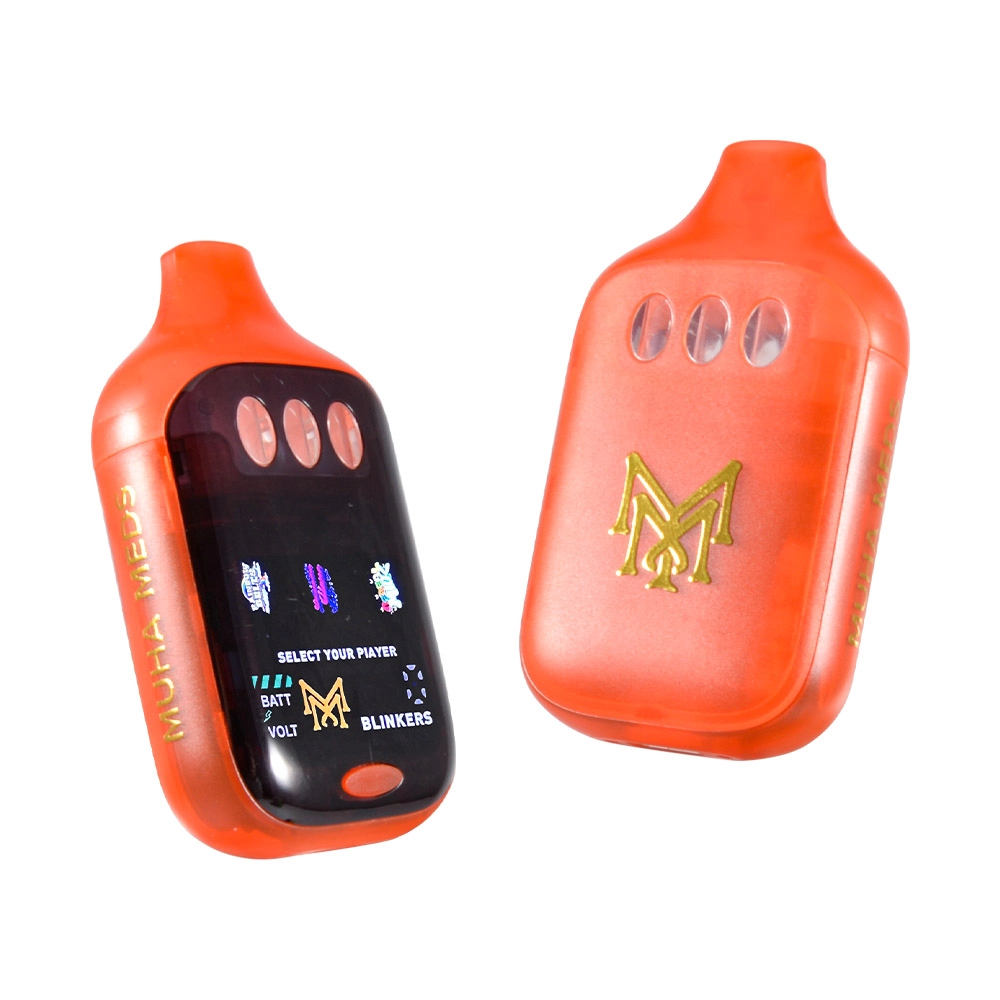
Triple Flavor vs Dual Chamber: What’s Best for Users?
Scope note: This article compares multi-chamber vape hardware concepts (dual-chamber vs triple-flavor) from a user-experience standpoint. It does not provide instructions for modifying devices or adding substances. Always follow applicable laws, age restrictions, and product regulations in your market.
Quick answer
If you want the simplest “two options, one device” experience, dual chamber usually wins on ease and consistency. If you want maximum variety in one body and you’re comfortable with a slightly more complex selector and interface, triple flavor is often the better fit—provided the hardware is well-built and clearly indicates which chamber is active.
What “dual chamber” and “triple flavor” actually mean
Both formats aim to solve the same user problem: “I want variety without carrying multiple devices.” The difference is the number of isolated reservoirs (“chambers”) inside one body—and how reliably the device keeps each option distinct.
Dual chamber in plain English
A dual-chamber device houses two separate internal reservoirs and switches between them through a selector (button/slider) and internal routing. Many designs allow A, B, and sometimes a blended mode depending on the model’s architecture. If you want a deeper breakdown of switching behavior and why it feels “simple but premium,” see dual chamber disposable.
Triple flavor in plain English
A triple-flavor device extends the same idea to three isolated reservoirs (A/B/C). The best versions focus on true separation (low cross-bleed), clear switching, and consistent draw/heat across all three paths. For a broader market and UX context on why 3-in-1 formats are accelerating, see triple tank all in one.
A quick note on “empty hardware”
Many buyers and brands evaluate multi-chamber formats as hardware platforms first (selector clarity, seals, airflow routing, consistency). If you’re browsing device shells and formats as products on-site, start with empty disposable vapes bulk to understand how multi-chamber options typically sit alongside single-chamber SKUs.
How the experience differs in real use
1) “Choice friction” vs “choice value”
Dual chamber tends to reduce decision friction: two options are easy to understand and easier to remember. Triple flavor increases choice value: three distinct options make the device feel more “menu-like,” but also requires clearer UI cues so users don’t accidentally pick the wrong chamber.
2) Flavor separation and cross-bleed risk
Users usually notice cross-bleed as “the flavors aren’t as distinct as advertised” or “everything tastes blended after a while.” The risk increases with more internal paths, seals, and interfaces. That does not mean triple is inherently worse—it means triple has less tolerance for sloppy routing, poor seals, or inconsistent wicking.
3) Switching clarity (the most underrated factor)
In practice, users trust multi-chamber devices when they can answer these questions instantly: “Which chamber am I on?” and “Did my switch actually change anything?” The best designs provide tactile certainty (detents, firm sliders) plus unambiguous visual cues (icons, chamber labels, or display indicators).
4) Consistency across chambers
Great multi-chamber hardware feels consistent: chamber A should not feel “weak,” chamber C should not feel “hot,” and transitions should be predictable. When a device is inconsistent, users interpret it as lower quality—even if only one chamber is underperforming.
5) Device size and “pocket reality”
Triple flavor often needs more internal volume and more routing, which can increase device size. For many users, a slightly larger device is acceptable if the variety payoff is real—but portability-sensitive users often prefer dual.
Side-by-side comparison table
| Decision factor | Dual chamber | Triple flavor |
|---|---|---|
| Variety per device | Two options (often A/B, sometimes blend) | Three options (A/B/C, sometimes blend modes) |
| Ease for first-time multi-chamber users | Usually easier to understand and explain | Can be easy, but depends heavily on UI clarity |
| Chance of user confusion | Lower (two choices) | Higher (three choices + more switching states) |
| Flavor separation risk | Moderate (fewer interfaces) | Higher sensitivity to routing/seal quality |
| Reliability sensitivity | Strong designs are common; fewer internal failure points | More internal complexity; QC matters more |
| Best “daily driver” feel | Very often yes | Yes if the user truly rotates flavors daily |
| Best for “variety seekers” | Good | Usually best-in-class (when separation is real) |
Which format fits which user
Choose dual chamber if you are:
- Consistency-first: you want one reliable feel and two predictable options.
- Low-maintenance: you prefer fewer switching states and less chance of confusion.
- Routine-driven: you mainly alternate between two profiles (e.g., “day” vs “night”).
- Portability-sensitive: you want variety without upsizing the device too much.
Choose triple flavor if you are:
- Variety-first: you genuinely rotate flavors often and value “choice on demand.”
- Experience-oriented: you enjoy a “menu” feel and don’t mind a more feature-rich interface.
- Social / multi-moment: you use different profiles for different settings and want them in one unit.
- Willing to be selective: you’ll prioritize devices with clear chamber indicators and strong separation.
Quality signals and red flags to watch
Green flags
- Clear chamber indication: the device makes “A/B(/C)” unmistakable via icons, labels, or display cues.
- Positive switching feel: the selector has firm stops; switching doesn’t feel mushy or ambiguous.
- Consistent performance across chambers: no chamber feels notably weaker, harsher, or more “muted.”
- Low cross-bleed: each chamber tastes distinct over time, not just on the first few uses.
Red flags
- Unclear states: users can’t tell which chamber is active without guessing.
- “Too many modes” marketing: lots of claims, but no clear explanation of how states map to chambers.
- Inconsistent draw feel: one chamber feels restricted while another feels too open.
- Advice to modify the device: if a seller suggests tinkering, bypassing protections, or adding substances, treat it as a serious risk.
Practical takeaway: With dual chamber, you can often “get away with” average switching clarity. With triple flavor, you can’t. Triple flavor needs excellent UI cues and tighter engineering tolerances to feel trustworthy.
Compliance and market reality (why it matters to users)
Multi-flavor formats exist in a market where regulators increasingly focus on product authorization, labeling, and youth access prevention. For users, that translates into a simple rule: choose products that are properly packaged, accurately labeled, and sold through lawful, age-gated channels.
- In the U.S., the FDA regulates e-cigarettes/ENDS and their components, and it continues active enforcement against unauthorized products. That enforcement pressure can affect availability and product consistency across regions.
- Public-health agencies have also emphasized risks associated with informal or illicit supply channels and product modification. From a user-safety perspective, “where it came from” matters as much as “how many chambers it has.”
Bottom line: Dual vs triple is a user-experience choice—but quality control, lawful sourcing, and clear labeling are the non-negotiables.
A simple decision tree
- Do you genuinely want three distinct options in one device?
If “no” or “not sure,” choose dual chamber. - Do you care more about simplicity than variety?
If “yes,” choose dual chamber. - Will you actually rotate flavors weekly (or daily)?
If “yes,” choose triple flavor—but only with clear chamber indication and strong separation. - Is portability a priority?
If “yes,” dual chamber often fits better. - Do you dislike “guessing” with selectors?
If “yes,” dual chamber is safer unless the triple device has unmistakable UI cues.
FAQ
Is triple flavor always better because it has more options?
Not automatically. Triple flavor is only “better” if the device keeps chambers distinct and makes switching unambiguous. Otherwise, the extra option can become extra confusion.
Do multi-chamber devices sacrifice performance?
They can if the internal routing, seals, or chamber-to-chamber consistency are weak. High-quality multi-chamber devices are engineered to keep draw feel and output consistent across chambers, but they are less forgiving of poor tolerances than single-chamber formats.
If I’m new to multi-chamber devices, what’s the safest pick?
Dual chamber is usually the smoother entry point: fewer states, easier switching logic, and a clearer “two-in-one” value proposition.
What should I prioritize above everything else?
Clear labeling, lawful sourcing/age-gating, and a device that makes the active chamber obvious. Variety is secondary to clarity and quality.

0 Comments