

The Ultimate Guide to Vape Branding & Custom Devices
Building a vape brand that lasts is no longer about “a nice logo on a generic stick.” Today, winning brands treat hardware choice, packaging, quality documentation, and compliance posture as one integrated system. This guide walks you through a practical, spec-driven approach to branding and custom devices—so you can launch faster, reduce returns, and defend your positioning in stricter regulatory and platform environments.
Important: This article is for lawful, licensed operations and lawful products only. It is not legal advice. Requirements vary by jurisdiction—confirm rules with qualified counsel and relevant regulators before listing, marketing, or shipping.
1) Why vape branding is harder (and more valuable) now
Regulatory scrutiny, platform policies, and enforcement actions are reshaping what “good branding” means in vaping. In the U.S., for example, FDA emphasizes that new tobacco products require marketing authorization, and enforcement actions have increasingly targeted unauthorized products and youth-appealing designs. The practical takeaway for brand owners is simple: your brand must be defensible—not just attractive.
Brand defensibility = documentation + design discipline
- Don’t build brand identity around “gimmick” designs that resemble phones, toys, or gaming devices. Even if the design converts, it can create enforcement and platform risk.
- Be consistent about what you sell: device-only vs. filled product vs. accessories. Mixed catalog signals increase compliance ambiguity and payment/shipping friction.
- Assume you will be asked for proofs: specs, test summaries for batteries/transport, QC records, and packaging standards.
Branding in 2026 is increasingly about reducing ambiguity for regulators, platforms, and downstream buyers—while still creating a product experience people recognize in one second.
2) Build your brand foundation: positioning, product architecture, and claims
Start with a “brand positioning triangle”
- Audience: Who buys, and why? (Retail chains, dispensaries, D2C, distributors, OEM brand owners, etc.)
- Promise: The one outcome you reliably deliver (e.g., “consistent draw + low clog returns” vs. vague “premium”).
- Proof: What you can show (QC SOP, component specs, battery/transport paperwork, packaging standards, serialized lots).
Define your product architecture (so your line feels “intentional”)
Strong vape brands avoid random SKU sprawl. Instead, they define a small set of device “families,” each with a clear role:
- Hero SKU: the flagship device format you build recognition around
- Accessible alternative: a simpler or lower-cost option with the same brand language
- Feature-led SKU: a format built around a differentiator (e.g., a display UI, dual profiles, premium finish)
Claims: keep them clean, provable, and jurisdiction-aware
Avoid medical/therapeutic claims. Keep performance language tied to measurable, testable attributes (battery capacity, charging type, airflow, coil compatibility, leakage control, and QC process). When in doubt, write “designed for” and “intended for” rather than absolute promises.
3) Choose the right custom device platform (the engineering view)
Device selection is where branding and engineering collide. The right platform makes your brand feel premium and reduces support tickets. The wrong platform forces you to “market your way out” of hardware complaints—an expensive game you rarely win.
Pick the platform that matches your real operating profile
- Oil/viscosity fit: inlet size, coil type, and airflow should match your fill characteristics and target draw.
- Battery/voltage logic: stable output under typical load matters more than peak numbers.
- Ergonomics: mouthpiece comfort, grip, and pocket durability are branding assets.
- Serviceability: clear indicators (lights/screens) reduce “is it dead?” returns.
Three proven “brandable” hardware directions
- Logo-forward, minimal hardware: wins on clean silhouette + finish quality (matte/soft-touch, metallic, or textured coatings). Great when you want packaging and device to feel like one system.
- UI-forward devices: devices that communicate status clearly (battery, mode, etc.) can reduce confusion and support load. If you’re exploring display-driven merchandising, start by browsing vape with screen options and shortlist the UI behaviors you can document in your spec sheet.
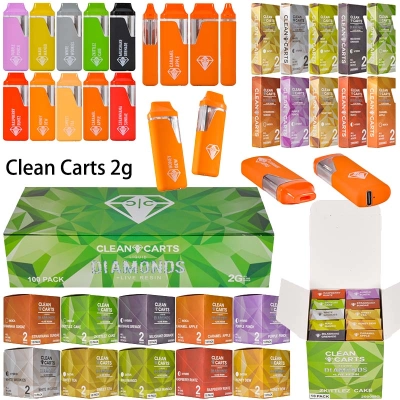
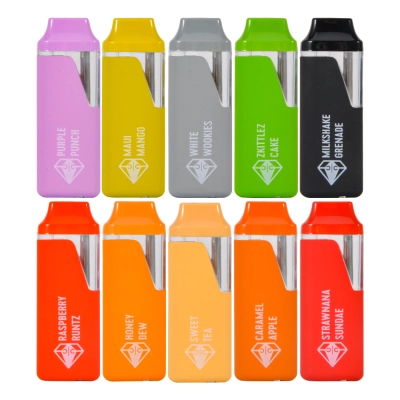
- Capacity-driven formats: if your market expects higher capacity, keep the product story simple and compliance-aware. For example, if you’re building a line around 2g-style capacity hardware, start from a standardized category like 2g disposable vape pen selections and then define what “your version” means (finish, mouthpiece geometry, UI, packaging system, and QC).
Custom vs. “semi-custom”: choose based on timeline and moat
- Semi-custom (fastest): existing device platform + your logo/finish + packaging.
- Custom mold (stronger moat): new silhouette, mouthpiece geometry, button layout, screen window, etc.
- System-level custom (strongest): device + packaging + inserts + tamper/traceability features + documented QC plan.
If you want to start the customization process directly, use the custom vape section as your internal reference point for branded hardware and packaging workflows.
4) Packaging & compliance: the “non-negotiables” checklist
Packaging is not just design—it’s risk control. The fastest way to lose a channel is to ship a beautiful box that fails a packaging or labeling rule. Below are common high-level requirements you should map by jurisdiction.
United States: child-resistant packaging and age-related constraints
- Liquid nicotine containers: U.S. CPSC guidance explains that the Child Nicotine Poisoning Prevention Act (CNPPA) requires compliant child-resistant packaging for liquid nicotine containers (see CPSC business guidance).
- Age gating: U.S. federal minimum age for sale of tobacco products is 21 (“Tobacco 21”). If you sell online in regulated categories, evaluate age verification at point of sale and delivery where required.
- Enforcement posture: FDA enforcement actions highlight elevated attention on unauthorized products and certain youth-appealing designs.
EU & UK: notification, labeling, and consumer protections
- EU: The European Commission summarizes e-cigarette rules under Article 20 of the Tobacco Products Directive (2014/40/EU), including requirements around product information and consumer-facing protections.
- UK: UK government guidance outlines requirements under the Tobacco and Related Products Regulations (TRPR) for consumer products, including safety/quality baselines and notification rules.
Packaging spec sheet: include these fields (even for “hardware-only” programs)
- Bill of materials (BOM): box material, inserts, coatings/lamination, inks, adhesives
- Print references: Pantone/CMYK values, dielines, finish callouts (matte/gloss/soft-touch/foil)
- Traceability: lot code fields, QR placement, serialization approach (if applicable)
- Warnings: jurisdiction-specific statements where required
- Barrier & tamper: seals, shrink, tear strips, and shelf-wear considerations
5) Quality systems & testing documents buyers increasingly expect
Device electrical safety and battery risk controls
Your brand is only as strong as your weakest battery event. Two widely referenced documentation expectations in modern supply chains are:
- UL 8139 (device electrical systems): UL describes UL 8139 testing as evaluating the safety of electrical, heating, battery, and charging systems for e-cigarettes/vaping devices. Even if you’re not certifying every SKU, understand how your platform aligns with these safety design expectations.
- UN 38.3 + test summaries (transport): PHMSA explains the UN 38.3 design tests and the lithium battery test summary requirement (including updates/revisions effective in 2024). This matters for shipping and warehouse programs.
Operational QC: the “B2B trust stack”
For wholesale and brand-owner procurement, these are the documents that reduce friction and help you close faster:
- Golden sample: approved reference unit with photos + measurement points
- Incoming inspection checklist: cosmetics, fit/finish, ports, indicator behavior
- Functional test plan: draw activation, button logic, charging behavior, indicator/screen states
- Packaging QC: print alignment, color tolerance, seal integrity, carton drop test (if used)
- Warehouse traceability: lot mapping from inbound to outbound shipments
The brand upside is real: when you can show “quality = documentation,” you can price more confidently and reduce disputes.
6) A realistic customization workflow: brief → prototype → production
Step 1: Write a brief the factory can execute
Use a one-page brief that includes:
- Target device family: form factor, capacity class, UI features, charging type
- Brand cues: silhouette references, finish targets, logo placement, color system
- Packaging scope: box, inserts, labels, seals, QR/serialization fields
- QC definition: what “pass/fail” looks like for cosmetics and function
- Timeline: prototype window, pilot run, mass production window
Step 2: Prototype with measurable acceptance criteria
- Approve color under consistent lighting
- Approve logo size and placement against a dimensional drawing
- Test charging behavior (especially USB-C port robustness)
- Validate indicator logic (lights/screens) with a simple state diagram
Step 3: Pilot run + “first article” QC
Before mass production, do a small pilot run and document first-article results. This is where you catch finish variance, misaligned prints, and assembly drift—before it becomes a brand problem.
Step 4: Lock the system and scale
Once the golden sample, packaging dielines, and QC plan are frozen, scaling is mostly operations: stable suppliers, consistent inspection, and disciplined warehouse lot control.
7) Go-to-market without getting flagged: channels, age gating, and defensibility
Channel fit: pick one “primary” motion first
- Wholesale/B2B: win with spec sheets, QC proofs, clear MOQs, and repeatable fulfillment
- Retail: win with packaging clarity, planogram discipline, and staff-friendly “how it works” messaging
- Online: win with risk controls (age gating where required), clean claims, and unambiguous product definitions
U.S. online compliance signals (high-level)
If you sell regulated categories online, be aware that federal enforcement efforts have highlighted requirements such as age verification expectations for ENDS delivery sales under the PACT Act framework. Translate that into operational controls (not “checkbox” compliance).
Make your listing defensible in one glance
- State exactly what it is: device-only/hardware-only vs. filled product
- Show the proofs: battery/transport paperwork references, QC approach, packaging spec highlights
- Keep it consistent: same naming system across product pages, cartons, invoices, and lot labels
8) Launch checklist (copy/paste)
- Brand system: positioning statement + color/typography rules + packaging style guide
- Device selection: platform chosen + feature rationale + spec sheet fields defined
- Prototype: cosmetic + functional acceptance criteria written and signed off
- Packaging: dielines finalized + finishes confirmed + traceability fields included
- Compliance map: by jurisdiction (US/EU/UK/other) with required warnings/notifications
- Quality: golden sample + incoming inspection + functional test plan
- Logistics: battery/transport documentation (e.g., UN 38.3 test summaries) organized
- Listing: unambiguous definitions + clean claims + support/returns language
FAQ
How many SKUs should I launch with?
Start with 1 hero device + 1 alternate. Add feature-led SKUs only when you can support them with documentation and consistent inventory. “Too many similar options” is a silent conversion killer.
What’s the fastest path to a branded device?
Semi-custom: pick a proven platform, then brand it via finishes + logo + packaging. Move to custom molds once you have repeat demand and a clear moat strategy.
What documents help me close wholesale buyers faster?
A one-page spec sheet, a QC/testing overview, and organized battery/transport documentation (plus consistent lot labeling) reduce procurement friction dramatically.
What’s the biggest mistake brands make?
Treating branding as “graphics only,” while ignoring the system underneath: device fit, QC discipline, packaging standards, and compliance posture. The market punishes weak systems—usually through returns, account flags, and margin pressure.
0 Comments