

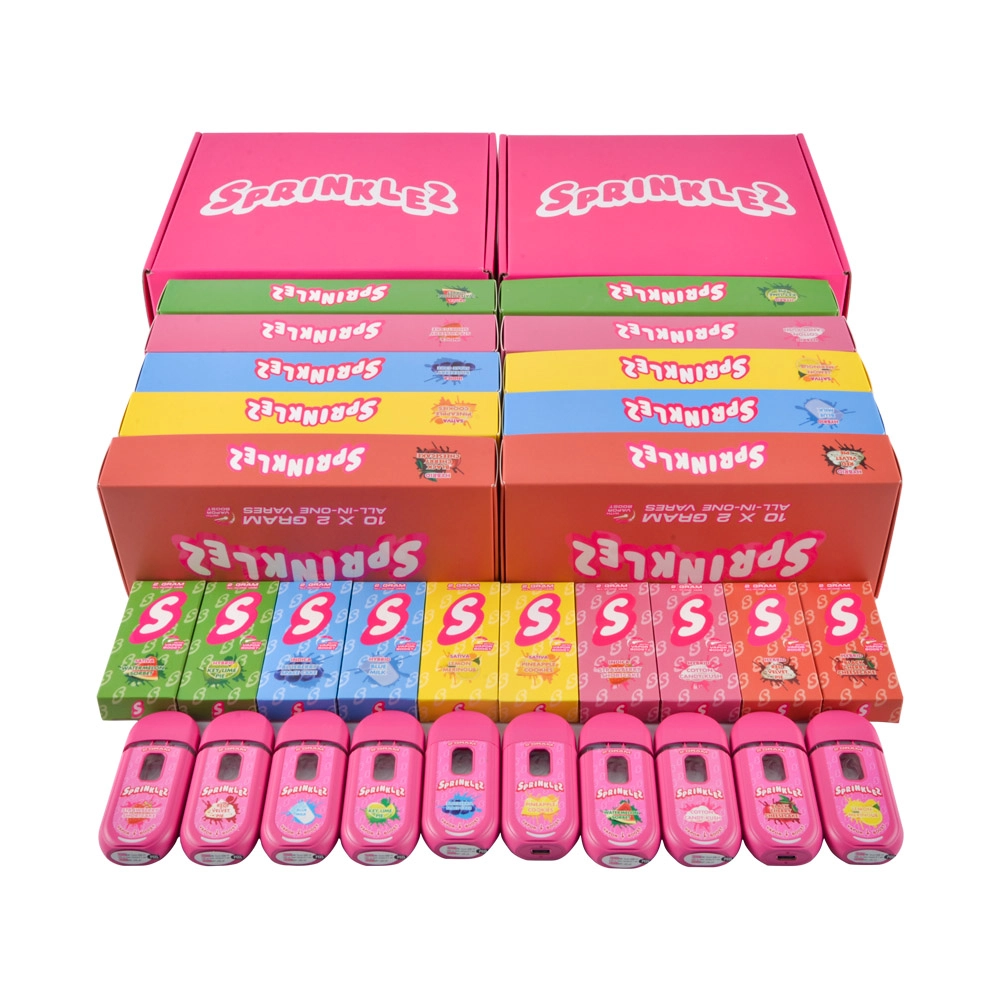
Sprinklez 2g: What Buyers Mean by “Smooth Pull”
In wholesale chats, “smooth pull” sounds simple—but buyers are usually describing a mix of draw feel, consistency, and “no-problem” performance across the life of a disposable. This guide translates that phrase into measurable checks you can use when sourcing (or reselling) Sprinklez 2g devices at scale.
Important note: This article focuses on device and procurement considerations only. Follow all local laws and age-restriction requirements in your market.
1) What “smooth pull” really means
When a buyer says “smooth pull,” they’re rarely talking about only one thing. In practice, it’s a shorthand for four expectations:
A. Comfortable draw resistance (not too tight, not too airy)
Buyers want a draw that feels predictable—enough resistance to feel controlled, but not so tight that it feels “blocked.” In lab testing, draw behavior is often discussed via pressure drop (how much suction is needed to move air through the device).
B. Consistent airflow from first puff to last
“Smooth” also means the pull doesn’t change dramatically after a short break-in period—no sudden tightening, no random gurgle, and no “it was fine yesterday, today it’s harsh.”
C. Clean delivery (no harshness spikes)
Users tend to describe “harsh” pulls when coil/liquid conditions create a hot, dry, or unstable delivery. Research on emissions testing highlights how sensitive outcomes are to puffing and operating conditions—and why avoiding “dry puff” conditions matters for realistic evaluation.
D. Low trouble rate (clogs/leaks/weak hits)
In wholesale terms, “smooth pull” often means fewer support tickets: fewer clogs, fewer leaks, fewer “won’t hit” complaints, and fewer returns.
2) Translate “smooth pull” into metrics
The fastest way to reduce “smooth pull” disputes is to convert the phrase into checks you can repeat on every lot. Standards organizations use fixed puffing conditions to compare products—for example, a widely used machine regime is a 55 mL puff over 3 seconds, repeated every 30 seconds (a flow rate around 18.3 mL/s), with a defined pressure-drop setup for consistency.
“Smooth pull” → measurable checkpoints
| What buyers say | What it usually maps to | How to verify (quick) |
|---|---|---|
| “Not too tight / not too airy” | Stable pressure drop (draw resistance) | Simple draw test on a sample set at a fixed puff profile; compare variance lot-to-lot |
| “Same hit every time” | Air path consistency + coil resistance stability | Measure resistance window on incoming QC; run a short standardized puff set for consistency |
| “No harsh pulls” | Avoiding dry/overheated conditions; stable wicking | Short life-cycle check: early puffs vs mid-run puffs; watch for harshness spikes |
| “Doesn’t clog” | Airway cleanliness + inlet geometry + sealing | Visual inspection + airflow check + leak check; track clog rate by lot |
| “No gurgle / no spit” | Condensation management + seal integrity | Shake/handling simulation + brief puff set; check for audible flooding or spitback |
Note: real human puffing behavior varies widely by user and device type, which is why standardized machine conditions are best treated as a comparability tool (great for lot control), not a perfect mirror of every user’s behavior.
3) What in the Sprinklez 2g platform affects pull
On the Sprinklez 2g product listing, the key hardware specs that most strongly influence draw feel and perceived smoothness include:
- Tank volume: 2.0 mL class
- Intake oil holes: 2 × 1.8 mm
- Coil resistance: 1.4 Ω
- Charging: USB-C
- Battery capacity: listed in the page’s spec section (confirm what is printed on your received batch/packaging for lot accuracy)
Why these matter to “smooth pull”
Intake geometry influences how consistently the device can feed liquid to the heating element under repeated puffs. Resistance helps define the heat profile at a given power system—affecting how “soft” or “sharp” a pull feels. Together with air-path alignment and sealing, these specs usually explain most “it pulls smooth” vs “it feels rough” feedback.
If you’re sourcing for buyers who repeatedly ask about smoothness, it’s worth keeping your merchandising and QC tightly aligned to the actual platform you sell—start with the product listing for Sprinklez 2 Gram Disposable Vape and ensure your lot checks match that platform.
4) Why pull feels rough: the usual failure modes
Air-path restriction (micro-blocks)
Tiny burrs, misalignment, or residue in the airway can create a “tight” pull that customers describe as rough. This often shows up as higher variance: some units feel fine, some feel blocked.
Condensation and flooding
Gurgle/spitback typically indicates excess condensation or flooding near the airway—users call this “not smooth” even if the device technically produces vapor.
Seal issues → leaks → messy airflow
A minor seal defect can both leak and distort draw feel. In bulk, this becomes a reputation problem fast because the buyer experiences “random bad units.”
Overheating / “dry puff” conditions
Academic work on emissions testing shows why avoiding unrealistic overheating matters: “dry puff” conditions can produce harsh sensations and skew perceived quality. For wholesale QC, your goal is to spot devices that drift into harsh pulls under normal, repeatable checks.
5) Bulk-buyer QC checklist
If “smooth pull” is part of your product promise, you need a mini-protocol that scales. Here’s a practical flow you can run on every inbound lot:
Step 1: Sampling plan (simple and disciplined)
- Pull a consistent sample size per lot (example: 10–30 units depending on lot size and risk tolerance).
- Record lot identifiers (carton label, batch code, arrival date, supplier invoice ID).
Step 2: Incoming inspection (2 minutes per unit)
- Visual: mouthpiece fit, seams, O-ring condition (if applicable), any visible residue.
- Airflow: quick draw check for “blocked” feel; flag outliers.
- Resistance window: spot-check coil resistance consistency where your process supports it.
- Charging: confirm USB-C port integrity and basic charge behavior on a subset.
Step 3: Standardized “smooth pull” screen
Use a repeatable puff pattern for comparability (many labs use fixed puff profiles such as 55 mL over 3 seconds every 30 seconds), then compare: (1) pull feel consistency across the sample set, and (2) whether any units drift into harsh or unstable behavior. The goal is not to copy a lab perfectly—it’s to avoid “randomness” in what you ship.
Step 4: Track outcomes by lot
- Clog/blocked rate
- Leak rate
- “Harsh pull” flags
- Charge/DOA rate
If you sell multiple platforms, keep this organized through category pages so buyers self-select correctly. For example, route general shoppers to 2 gram disposable vape bulk and buyers seeking refillable/empty platforms to wholesale disposable vapes, then apply the same lot-control discipline behind the scenes.
6) RFQ questions that prevent reorder drama
“Smooth pull” problems usually appear at reorder time—when the new lot “doesn’t feel like the last one.” Add these to your RFQ / supplier confirmation:
- Platform lock: Confirm the exact platform revision (airway design, inlet geometry, coil/resistance target).
- Draw consistency: Ask how draw resistance is verified (pressure-drop method, sampling plan, acceptable variance).
- Resistance control: What is the target and tolerance window, and how is it checked per lot?
- Sealing & leak checks: What test is used (e.g., visual + handling simulation) and what is the reject threshold?
- Packaging controls: How are mixed versions prevented (carton labeling, run IDs, QC sign-off)?
Pro tip: ask for lot-level evidence
Even a simple supplier QC sheet (date, lot code, sample size, pass/fail counts) makes it easier to defend your listing quality and reduce disputes when a buyer claims “this batch pulls rough.”
7) How to sell “smooth pull” without overpromising
Buyers love the phrase “smooth pull,” but vague promises can backfire. Stronger merchandising looks like this:
- Say what you control: “Lot-checked draw consistency” beats “the smoothest ever.”
- Define smoothness: “Balanced draw + low clog rate” is clearer than “super smooth.”
- Align to standards: Explain that your screening uses repeatable puff checks and lot tracking (standardized regimes exist for product comparison in labs).
That framing builds trust with wholesale accounts because it signals you’re managing repeatability—not selling hype.
8) FAQ
Is “smooth pull” the same as “strong hit”?
Not necessarily. “Smooth pull” usually describes airflow comfort and stability. “Strong hit” is a separate perception that can involve many factors (including heat delivery and user behavior). Standards and research consistently show puffing conditions can change outcomes dramatically, which is why “smooth” should be tied to repeatable checks.
Why do some units feel tighter than others in the same batch?
In most cases: small air-path variation, minor seal alignment differences, or contamination/residue. This is why sampling and variance tracking matter.
What’s a credible way to compare pull between products?
Use the same repeatable puff/check method on both products and compare variability (not just the “best-feeling” unit). Standard machine regimes (like 55 mL / 3 s / 30 s) exist to make comparisons meaningful in testing.
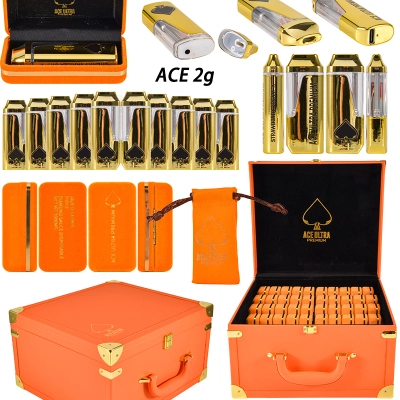
Where should I start if I’m stocking multiple 2g styles?
Start by grouping correctly (by platform type and listing specs), then enforce a basic inbound QC routine per lot. This reduces the chance that a buyer’s “smooth pull” expectations were based on a different platform than the one they received.
0 Comments