

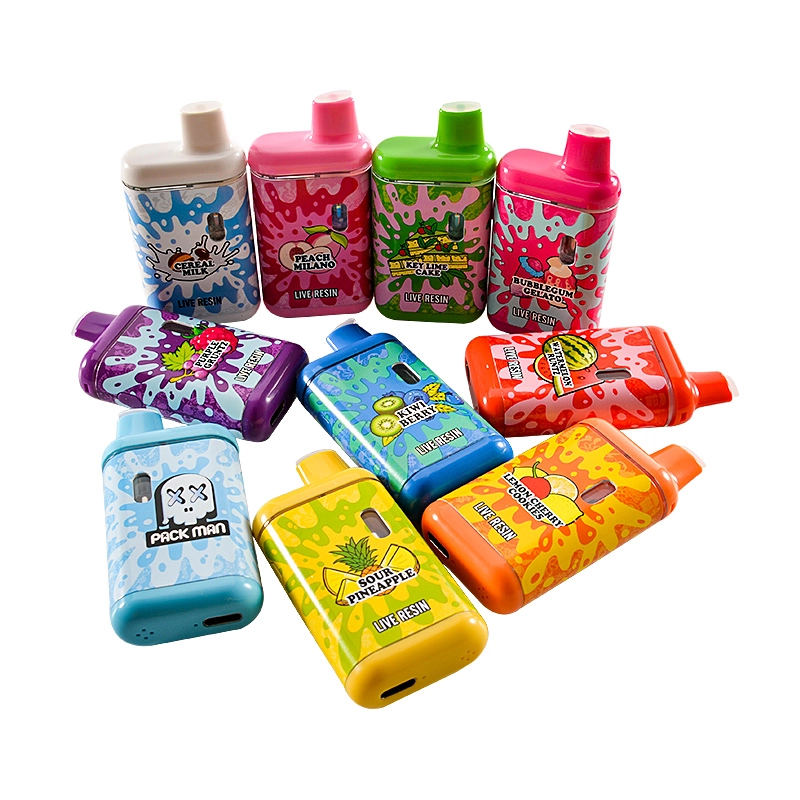
Packman 1000mg Disposable Vape Review and User Insights
This article looks at Packman 1000mg (1g) empty disposable vape hardware—often searched as packman vape—from a B2B buyer’s perspective. We summarize specs visible on our product listings, pull in public user feedback trends, and map what to request from suppliers so your team can qualify devices quickly and compliantly.
What “1000mg / 1g” Means for Empty Disposables
In empty AIOs, “1000mg” or “1 gram (1.0 ml)” refers to the nominal oil capacity the tank is designed to hold. Devices ship without oil and are filled, capped, and labeled after they pass your internal QA and any state-mandated testing in final form. See our 1g disposables hub for component choices and selection criteria.
Quick Spec Snapshot (from our listings)
|
Attribute |
Typical Packman 1g Config |
Why it matters |
|
Oil volume |
≈1.0 ml (1000 mg) |
Standard format for single-gram SKUs. |
|
Battery |
Vendor-specific; long-life cell |
Run time across full tank with pre-heat draw. |
|
Heater |
Modern ceramic core |
Consistency and heat distribution for thicker oils. |
|
Body |
Compact AIO; versions with screen available |
Screens add puff/voltage indicators. |
|
Packaging |
Bulk master cases; USA/EU stock options |
Lead time and landed cost optimization. |
What We See on ExtractsVape Listings Right Now
- Packman 1g page: multiple 1g SKUs including USA-stocked boxes and empty versions for white-label filling.
- Melt × Packman 1g: a co-branded series with versions that include a small screen for status readouts.
- Gen‑3 1g body style: compact chassis targeted at on‑the‑go use; listings emphasize “device ships empty.”
User‑Reported Experience
Public video reviews and forum comments about “packman vape” frequently mention smooth draw, big clouds, candy‑leaning flavors, and variable authenticity between vendors. Treat these as qualitative signals, not lab data.
Engineering & QA Checks Worth Running
1) Battery & Charging Safety
Ask for a UN 38.3 test summary for the cell/pack used in the device, and whether the full device design has been evaluated to UL 8139. Where rechargeable cells are used, IEC 62133‑2 certification of the cell helps reduce systemic risk.
2) Airflow, Draw Resistance & Pre‑Heat
Verify the inlet geometry and pre‑heat curve with your target oil. Record pressure‑drop (ΔP) across the draw at 0.8–1.2 L/min.
3) Materials & Extract Compatibility
Confirm wetted parts are validated for your oil chemistry and temperatures. Request RoHS-style metal tests and heavy‑metal screening by an ISO 17025 lab.
4) Filling, Capping, and Torque Windows
Verify fill temperature, needle gauge, headspace, and cap torque windows to minimize leaks. Run an ISTA‑3A shipping simulation on first article.
5) Labeling & Market Compliance
Rules vary by state. Some require a QR code linking to a batch COA; others allow QR codes only as supplemental information and insist required details appear directly on the label.
Buying Tips for B2B Teams
- Ask vendors for UN 38.3 test summaries and proof of UL 8139 evaluation where available.
- Confirm cell pedigree and IEC 62133‑2 certification for rechargeable designs.
- Request a first‑article run with your oil to evaluate draw resistance, pre‑heat, and leak rate.
- Verify box counts and MOQs on current Packman 1g listings before committing to a lane.
- For Metrc markets, ensure Retail ID / QR processes align with your state’s guidance.
Who Is the Packman 1g Form Factor For?
If your brand prioritizes simple, compact devices with straightforward filling, the Packman 1g profile is a safe baseline. Choose screened variants for markets that value usage feedback; choose non‑screened for maximum cost control.
Important Notes & Disclaimer
This review covers hardware only. ExtractsVape supplies empty devices for licensed manufacturers to fill and label in accordance with local law. We do not make claims about any oils, potencies, or health effects.
0 Comments