

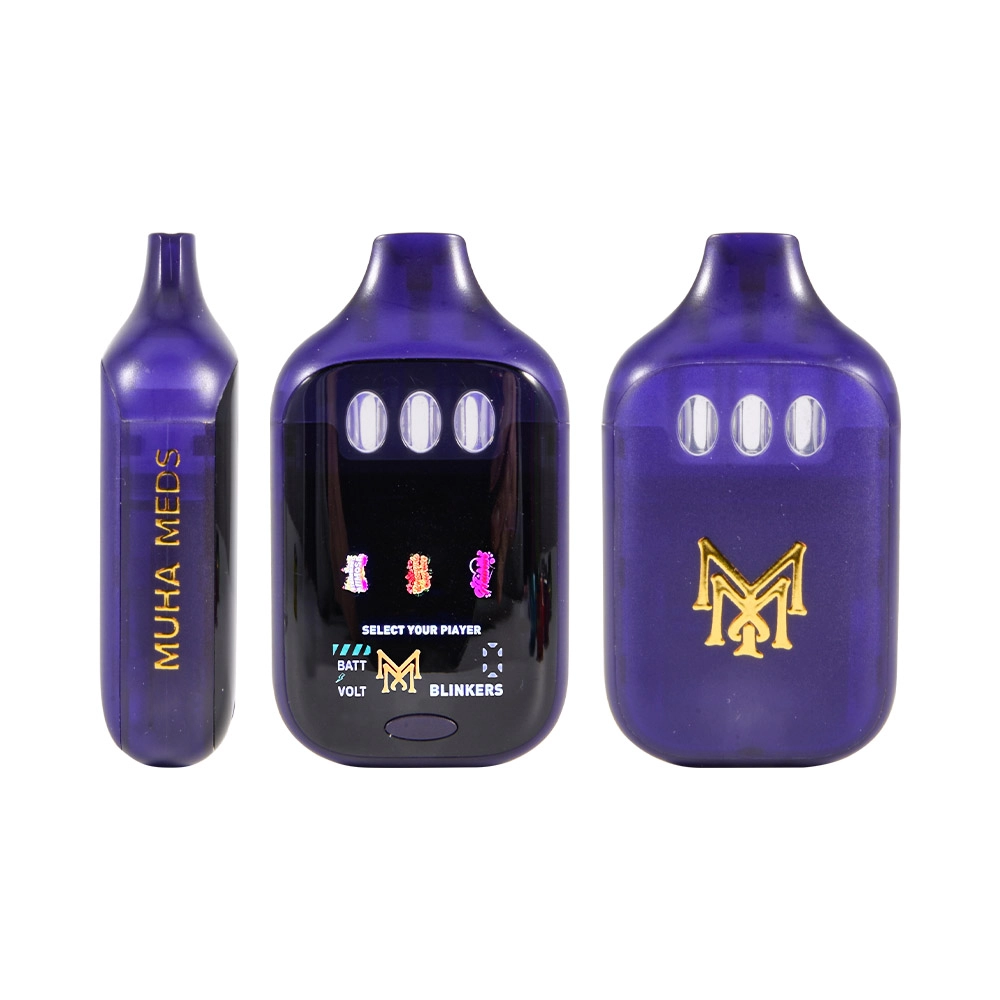
Muha Meds Triple Flavor Vape B2B Wholesale Buying Guide
Multi-chamber “triple flavor” disposables are a fast-moving format in wholesale because they deliver variety-per-device without forcing retailers to stock multiple single-flavor SKUs. But that variety comes with more internal routing, more seals, more switching states, and therefore more ways quality can drift. This guide is written for B2B buyers (brand owners, processors/packers, wholesalers, distributors, and retail chains) who want to source triple flavor vape hardware confidently—without avoidable QC failures, compliance surprises, or margin erosion.
Scope note: This article focuses on device hardware, packaging, and procurement controls. Always follow applicable laws, age-gating requirements, and your market’s product regulations.
1) What “Triple Flavor” Really Means (and Why Buyers Get Burned)
A triple flavor disposable is essentially a single device body that contains three isolated reservoirs (often labeled A/B/C). The user can switch among them using a selector (slider/button) and, on premium models, a display indicator. For B2B buyers, the key is not “three flavors” as marketing—it’s the underlying fluid isolation + routing.
The two failure modes that create most complaints
- Cross-bleed: flavors become indistinct over time because isolation is weak, seals are inconsistent, or routing tolerances drift.
- State confusion: users can’t tell which chamber is active (or switching is unreliable), so “triple” feels random instead of premium.
Your procurement job is to choose a platform where separation and switching clarity are engineered in—not “hoped for.”
2) Start With Your Commercial Objective (Not a Spec Sheet)
Pick one primary goal per SKU
- Retail velocity: low returns, consistent draw, simple switching, minimal training for staff.
- Premium positioning: screen/UI, strong chamber indication, tight flavor separation, polished finishing.
- Operational efficiency: stable fill performance across viscosity bands, predictable QC, packaging ready for compliant labeling.
Then choose the platform family
If you’re building a broad catalog, treat triple flavor as a premium or “variety” line, not the default. Dual-chamber often wins for simplicity; triple flavor wins when you can support it with better UI cues and tighter QC.
3) The B2B Spec Checklist That Actually Prevents Returns
A) Chamber architecture (the real “triple flavor” spec)
- True isolation: three physically separated reservoirs with controlled routing and seals.
- Selector feel: firm detents/stops (no mushy switching).
- Chamber indication: A/B/C labeling and/or display indicator that cannot be misread at a glance.
B) Heating + draw consistency
- Coil type: ceramic or mesh (ask which is used and why).
- Resistance consistency: request a resistance tolerance statement (and test method).
- Airflow path design: stable draw across all chambers; chamber C should not feel “hotter” than A.
C) Battery + charging (where compliance and safety scrutiny often lands)
- Battery capacity (mAh): match to expected use-case and screen/LED power draw.
- USB-C port robustness: port alignment, retention, and stable charging contact.
- Charge behavior: ask for charge termination logic and low-voltage behavior (screens often reveal weak firmware).
D) Materials + sealing (the leak/cross-bleed driver)
- Tank material: confirm resin/glass choice and compatibility expectations for your intended formulations.
- Gaskets/seals: ask what silicone/spec is used and whether it’s consistent across lots.
- Mouthpiece fit: loose tolerances can cause condensation paths and perceived leaks.
4) Sampling Strategy: Don’t “Approve” Triple Flavor With a Single Sample
Use a staged approach
- Visual + handling sample: confirm build finishing, selector feel, labeling clarity, and display readability.
- Pilot lot sample: test a small batch using your incoming QC process (see Section 5).
- Pre-production confirmation: lock specs + packaging + labeling files before mass production.
What to test during sampling (minimum)
- Chamber-by-chamber activation: verify A, B, and C each activates reliably and is indicated correctly.
- Consistency check: compare draw feel and heat across chambers.
- Leak/condensation screen: short drop/handling simulation + storage orientation check.
- Charge test: stable charge initiation, no intermittent contact, and predictable indicator behavior.
5) Incoming QC: The Wholesale Control That Saves Your Margin
If you sell B2B, your reputation is built on consistency. Triple flavor adds complexity, so your QC needs to be structured and repeatable. A practical approach is to run incoming QC using an AQL plan and add targeted tests for multi-chamber switching and indicators.
Recommended incoming inspection checklist
- Appearance + finishing: scratches, misaligned seams, unclear chamber markings, loose mouthpieces.
- Selector function: positive detents, no ambiguous “in-between” states.
- Chamber verification: confirm A/B/C states map to the correct indicator (label or screen).
- Electrical spot-check: coil resistance within tolerance; screen/LED functions.
- Charge port fit: no wobble, stable connection, predictable charging indicator.
- Packaging audit: correct cartons, inserts, SKU labels, and any compliance markings required for your market.
6) Compliance & Documentation: What Serious Buyers Ask For
Regulations vary by country and product category. Still, reputable wholesale operations tend to standardize a documentation package because it reduces shipping delays, chargebacks, and platform risk.
Commonly requested documentation (hardware side)
- Battery transport compliance: UN 38.3 evidence and shipping support documents are widely required for lithium battery transport.
- Electrical safety testing: UL 8139 is frequently referenced in North America for the electrical systems of vaping devices.
- Child-resistant packaging expectations: many markets require CR features for certain product types; confirm your market’s rules.
- Material disclosures: material list / supplier declarations where applicable (especially for components in contact with consumables).
Market reality: enforcement is tightening
If you operate in nicotine/ENDS markets, be aware that enforcement actions and regulatory scrutiny have increased in recent years. Even if you sell hardware, you’ll want clean documentation and careful product positioning to avoid unnecessary risk.
7) Branding, White-Label, and IP Hygiene (Don’t Skip This)
Many B2B buyers want devices that “match what customers recognize.” That’s understandable, but it can also create risk. If you are not authorized to use a third-party trademark, you should not print it on devices or packaging. The safer path for long-term scale is white-label/OEM with your own brand assets.
Best practice for wholesale buyers
- Use your own branding (device + box) unless you have documented authorization.
- Lock artwork files (Pantone, dielines, placement) before mass production.
- Build a SKU logic for chamber variants (A/B/C naming, icons, and packaging cues) so warehouses don’t mix versions.
8) Logistics: Warehousing, Lead Times, and Shipping Reality
Choose inventory strategy
- In-stock warehouse buys: faster fulfillment; best for replenishment and stable SKUs.
- Custom production buys: best for private label and differentiated packaging; requires tighter project control.
Plan for lithium battery shipping constraints
Triple flavor devices often include screens and higher power draw, which increases attention on battery and shipping paperwork. Build buffer into timelines and ensure your shipment documents match the carrier’s requirements.
9) A Simple Decision Matrix for Buyers
| Decision factor | Triple flavor (3 chambers) | What you must control |
|---|---|---|
| “Variety” positioning | Excellent | Clear A/B/C cues + packaging clarity |
| Returns risk | Higher if QC is weak | Chamber-by-chamber acceptance testing |
| Retail staff training | Moderate | Simple explanation + consistent UI |
| Premium feel | High (especially with display) | Screen accuracy + stable firmware behavior |
10) RFQ Template for Triple Flavor Wholesale
Use this to speed up quoting and avoid “spec drift” later:
RFQ: Triple Flavor (A/B/C) Disposable Hardware

1) Target market(s):
2) Order quantity (pilot + production):
3) Chamber architecture: true 3-reservoir isolation? (yes/no; describe)
4) Total capacity + chamber split:
5) Coil type + nominal resistance + tolerance:
6) Battery capacity (mAh) + charge port (USB-C?) + charge behavior:
7) UI: chamber indication (label/screen), puff/battery indicators:
8) Materials in contact with consumables (tank, seals, mouthpiece):
9) Incoming QC support: resistance spec, functional test guidance, AQL suggestions:
10) Packaging: box style, inserts, labeling requirements, carton pack-out:
11) Documentation: UN 38.3 evidence, test summaries where applicable, any electrical safety testing references:
12) Lead time + shipping terms + warehouse options:
13) Warranty/DOA policy and replacement process:
Where to Start on Extractsvape
If you want to shortlist platforms quickly, start with these three pages:
- Muha Meds vape wholesale — browse brand-category options and current formats.
- empty disposable vapes bulk — compare platform families and baseline hardware options.
- vape with screen — evaluate display-driven SKUs where UI clarity matters most.
Final advice: triple flavor succeeds when you treat it like a platform—lock your specs, enforce chamber-by-chamber QC, and keep your compliance documentation clean. Do that, and the format can be a high-margin “variety” line instead of a returns headache.
0 Comments