

Finding the Best Disposable Vape Manufacturer Near Me: A Local Guide
Searching “disposable vape manufacturer near me” sounds straightforward—until you realize most results are distributors, brand resellers, or warehouses, not true factories. This guide shows how to identify legitimate manufacturers (or OEM/ODM partners), verify compliance, and choose a supplier that can actually deliver consistent quality—locally and at scale.
Note: This article is for business sourcing and risk-control purposes. Regulations vary by country/state. This is not legal advice.
1) What “Near Me” Really Means in Manufacturing
In vaping hardware, “near me” usually means one of three things:
- Local inventory: a domestic warehouse that ships quickly (often supplied by an overseas factory).
- Local assembly/pack-out: final packaging, labeling, or kitting done in your region.
- True local manufacturing: a facility that owns production lines (less common, usually higher cost).
A great “near me” partner doesn’t have to be a factory down the street—but they must be able to prove traceability, repeatability, and compliance for the market you sell into.
2) Manufacturer vs. Distributor: How to Tell Fast
Use this quick filter before you waste time:
- Manufacturer/OEM should provide: factory address, production photos/videos, QA process, spec sheets, test reports, and a sampling plan.
- Distributor/Reseller usually provides: a catalog, price list, and stock levels—but limited engineering/QC documentation.
If your goal is private label or stable long-term supply, prioritize OEM/ODM capability. If your goal is fastest replenishment, prioritize local stock—but still request compliance and lot traceability.
3) How to Build a Local Shortlist (That’s Actually Real)
A. Use “manufacturer-intent” search terms
- “disposable vape OEM manufacturer + [city/state]”
- “vape device contract manufacturing + [region]”
- “electronic assembly ISO 9001 + vaping device”
- “private label disposable vape packaging + [near me]”
B. Cross-check business legitimacy
- Verify business registration and a real facility address (not just a mailbox or shared office).
- Ask for a recent factory audit summary (even a basic one) and quality documentation.
- Confirm whether they own production or outsource everything (outsourcing is fine—if disclosed and controlled).
C. Shortlist by “capability fit,” not hype
The best supplier is the one whose production and QC match your product type: draw style, capacity class, coil family, mouthpiece design, screen/indicator needs, packaging format, and the markets you ship to.
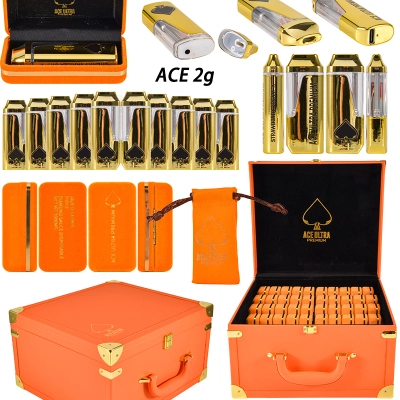
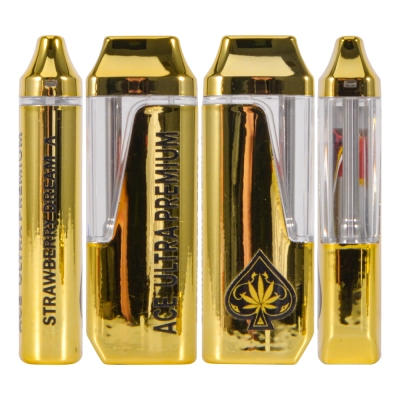
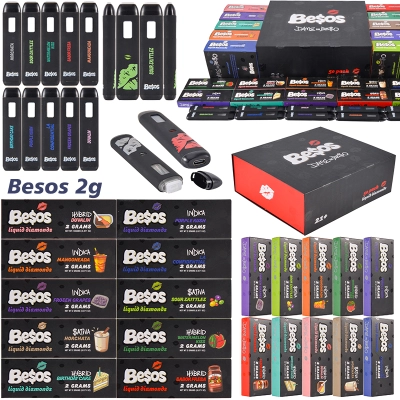
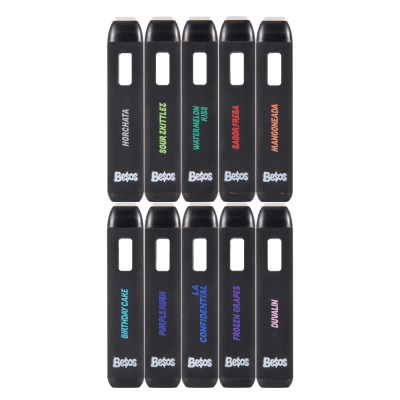
If you want a practical starting point with both in-stock options and OEM workflows, you can browse: wholesale disposable vapes, compare popular capacity platforms in our 2g disposable wholesale collection, or go straight to branded projects via custom vapes.
4) Compliance First: The Non-Negotiables
Compliance is what turns “a supplier” into “a safe supplier.” Even if you’re sourcing hardware-only, your device may still trigger requirements for labeling, shipping, battery safety, and market authorization depending on destination.
A. If you sell into the United States
- FDA regulates ENDS (e-cigarettes/vapes) and components/parts in scope; manufacturers and importers have obligations tied to how products are marketed and distributed. (FDA ENDS overview)
- Use FDA’s “authorized products” references as a reality check for nicotine-market claims: (FDA list of authorized e-cigarettes)
- If you ship in U.S. interstate commerce, understand PACT Act requirements (registration/reporting, delivery-sale rules): (ATF: Vapes & e-cigarettes)
B. If you sell into the UK / Great Britain
- MHRA guidance and notification expectations are central for e-cigarette/vape products: (MHRA guidance hub)
- Regulatory direction can also change demand planning fast. Example: the UK banned single-use vapes from 1 June 2025: (GOV.UK announcement) (Business guidance)
C. If you sell into the EU
- Under the Tobacco Products Directive, manufacturers/importers must submit product information to authorities via EU-CEG: (EU-CEG step-by-step) (EC: electronic cigarettes)
- For electronics compliance and materials risk control, RoHS and REACH matter for many device components and packaging: (EC: RoHS) (ECHA: SVHC Candidate List)
D. Battery shipping & safety documentation (often missed)
- Lithium cells/batteries are tied to UN 38.3 transport testing (and related documentation expectations): (PHMSA: lithium battery test summaries) (UNECE: UN Manual of Tests & Criteria)
- Device electrical-system safety testing is commonly benchmarked to UL 8139 in North America: (UL 8139 certification services)
Bottom line: the “best manufacturer near me” is the one who can hand you a complete, organized documentation pack before you place a large PO.
5) Quality Control That Protects Repeat Orders
Local speed doesn’t matter if your second shipment leaks, misfires, or has inconsistent draw. Ask for a QC flow that includes:
A. Pre-production controls
- Approved golden sample (physical reference + photos + measurable specs)
- Critical-to-quality list (CTQs): leak rate, draw resistance, coil resistance tolerance, charging behavior, indicator/UI behavior
- Incoming QC for key parts (coil, seals, tank, mouthpiece, PCB/battery)
B. In-process controls
- Seal integrity checks (especially around tank-to-body interfaces)
- Functional tests: draw activation, airflow consistency, indicator accuracy (if screen/LED)
- Sampling plan (AQL or equivalent) with clear defect definitions
C. Pre-ship controls
- Random carton checks + drop/handling simulation for packed goods
- Lot traceability: batch/lot identifiers tied to production dates and component lots
- Documentation pack: battery transport docs, test summaries, and any market-required declarations
6) RFQ Questions to Ask Any “Local Manufacturer”
Copy/paste these into your RFQ email:
- Facility & capability: Do you own the production line(s) or outsource? Which steps are in-house?
- Sampling: What is your sample lead time? What tests do you run on samples before shipping?
- QC proof: Can you share your QC checklist and defect classification (critical/major/minor)?
- Traceability: How do you label lots and link them to component batches?
- Compliance docs: Can you provide battery transport documentation and relevant test summaries?
- Change control: How do you notify customers about component or process changes?
- Warranty/DOA policy: What is your DOA threshold and replacement/credit process?
- Lead time & buffers: What’s your standard production lead time and peak-season constraint?
7) Pricing, MOQ, Lead Time: What Good Looks Like
Pricing isn’t just “unit cost.” It’s the total cost of stable supply:
- MOQ structure: A good supplier offers a realistic pilot MOQ before scale, with clear tier pricing.
- Lead time clarity: Expect separate timelines for sampling, packaging proofing, and production.
- Spec stability: The cheapest quote often hides component swaps later—ask about change control.
Also remember: enforcement and shipping restrictions can change your true landed cost (carrier options, B2B routing, paperwork). Build buffers into your plan—especially if you sell across state or country borders.
8) Red Flags (Walk Away)
- Refuses to provide a real factory address or won’t do a video walkthrough.
- No QC checklist, no defect definitions, no sampling plan—just “don’t worry.”
- Can’t explain lot traceability or change control.
- Can’t provide battery transport documentation when asked.
- Pricing is dramatically below market with vague specs (“same as others”).
- Pushes you to skip sampling to “save time.”
9) A Simple Scorecard You Can Use Today
Score each candidate 1–5 (5 is best). If any “Compliance Docs” or “Traceability” scores under 3, pause before ordering.
| Category | What “Good” Looks Like | Score (1–5) |
|---|---|---|
| Factory proof | Verifiable facility + walkthrough + clear in-house steps | |
| QC system | Documented checklist, sampling plan, defect definitions | |
| Traceability | Lot coding tied to component and production batches | |
| Compliance docs | Market-relevant docs + battery transport/test documentation | |
| Sampling speed | Fast samples with test results (not just “a unit in a box”) | |
| Commercial terms | Clear MOQs, tier pricing, DOA/warranty policy | |
| Local advantage | Domestic stock, fast support, or local pack-out/assembly |
10) Next Steps: Shortlist → Samples → Scale
- Shortlist 3–5 candidates using “manufacturer-intent” search terms and legitimacy checks.
- Request samples + QC evidence (not just photos).
- Run a pilot order with defined acceptance criteria and lot traceability.
- Scale only after stability—repeatable lots beat “one perfect shipment.”
If you want to move faster without sacrificing control, start from proven in-stock platforms and iterate from there. Many brands begin with ready-to-brand options, then transition into customization once the spec is stable and demand is proven.
FAQ
Is a “local manufacturer” always better?
Not always. Local inventory and support can be a huge advantage, but the best partner is the one with strong documentation, repeatable QC, and clear compliance for your target markets.
How do I verify someone is a real manufacturer?
Ask for a facility walkthrough, QC documentation, and traceability explanations. A real manufacturer can show process control, not just a product list.
What documents should I request first?
Start with: spec sheet, QC checklist, sampling plan, lot traceability approach, and battery transport documentation (where applicable). Then add market-specific compliance requirements based on where you sell.
0 Comments