

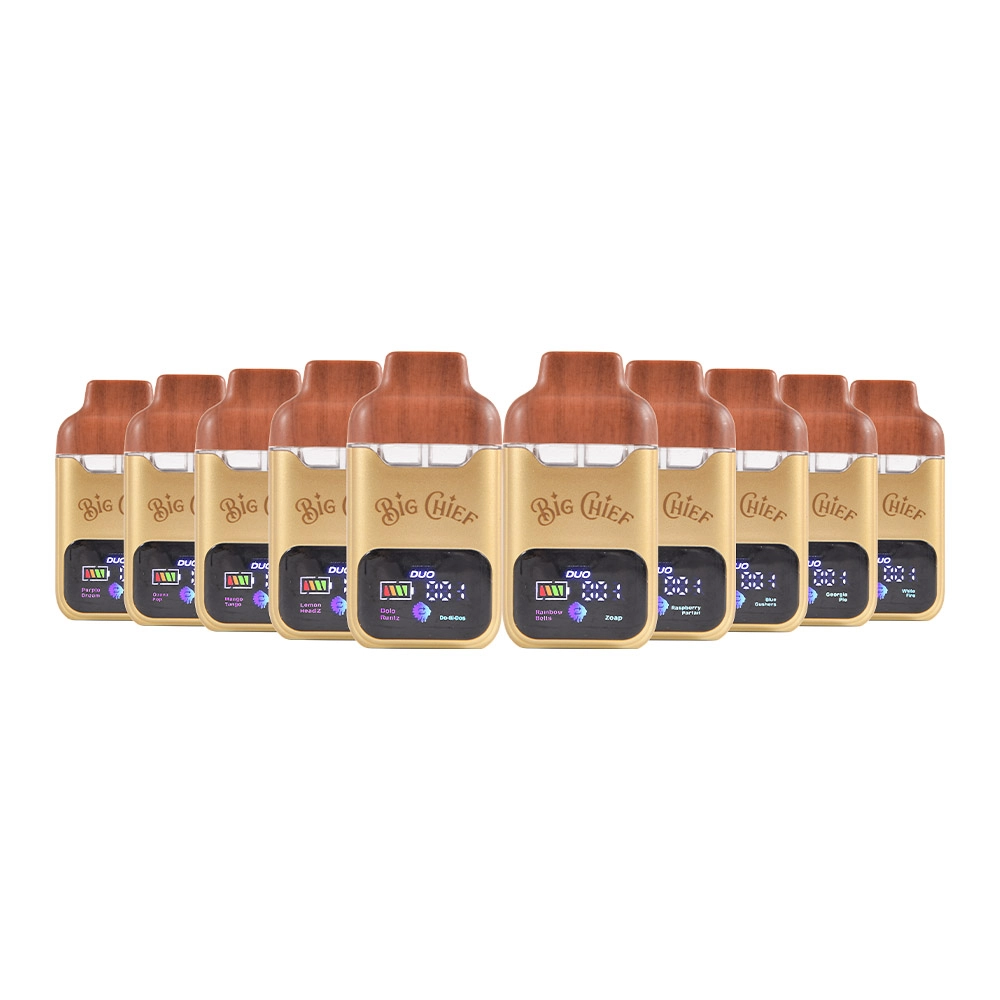
Big Chief Duo 2g: Why Dual-Chamber Shells Convert in Retail
Dual-chamber is one of the few device formats that can feel “new” on a crowded shelf without forcing retailers to carry twice the SKU count. In this post, we break down why the Big Chief Duo 2g format converts at the point of sale—using proven shopper-behavior research, real merchandising constraints, and a practical retail playbook you can deploy this week.
Note: This article discusses hardware/shell strategy for legal retail channels. Always follow your local regulations and store compliance policies.
What “Duo 2g” means in retail terms
A dual-chamber 2g platform is designed to hold two separate reservoirs inside one device (often split as 1+1), letting shoppers switch between two options without buying (or carrying) two separate items. In Big Chief’s Duo format, the dual-tank structure is paired with a selector/switch workflow so each chamber can be used without mixing when the device is engineered correctly.
If you’re merchandising this category, don’t frame it as “more features.” Frame it as two decisions solved by one SKU: (1) “Which flavor do I want?” and (2) “Do I want variety without buying twice?”
Want to see current Duo listings and comparable formats on our site? Browse big chief vape, explore category-wide options in empty disposable vape pens, or compare how the format sits inside the broader 2g disposable vape pen market.
The 5 conversion levers dual-chamber unlocks
1) Variety without “choice overload”
Retail conversion often dies at the shelf because the shopper’s brain hits friction: too many similar options, too little confidence, and too much time pressure. Classic field experiments on consumer choice show that a smaller, curated set can drive higher purchase rates than a larger assortment—even when the larger set attracts more attention.
Dual-chamber is a cheat code: it gives shoppers felt variety (two experiences) while keeping the shelf decision simple (“this one covers both moods”).
2) Convenience is the macro-trend (and Duo rides it)
Multiple retail reports continue to show shoppers gravitating toward convenience and value. When shoppers are moving across many retailers and channels, the winning products are the ones that reduce steps: fewer add-ons, fewer “I’ll decide later,” fewer reasons to walk away. Dual-chamber’s value proposition is immediate: one device, two options.
3) “Newness” that’s easy to understand in 3 seconds
Not all innovation converts. The innovation that converts is the kind a shopper can understand instantly from a quick glance, a simple phrase, or a short staff pitch. “Two flavors / two chambers” is one of the rare claims that doesn’t require a technical explanation to feel valuable.
Big Chief’s own DUO positioning also leans into a simple consumer truth—this format is built for “flavor chasers” and heavy users—so the retail story stays clean even when the store is busy.
4) Higher perceived value → cleaner trade-up path
Dual-chamber naturally creates a trade-up ladder. Even when pricing varies by brand and market, the shopper’s internal logic is consistent: “I’m getting more flexibility, so paying a bit more makes sense.” That typically means fewer “let me think about it” outcomes and more confident checkout behavior—especially when the packaging makes the dual format obvious.
5) Better retail math: fewer SKUs, less dead inventory
Retailers everywhere have been tightening assortments and pruning slow movers to reduce complexity and protect profitability. Dual-chamber helps you do that without making your selection feel smaller to shoppers.
Conversion levers at a glance
| What the shopper feels | What the retailer gains | How to merchandise it |
|---|---|---|
| “I don’t have to pick just one.” | Higher close rate on undecided shoppers | 2-sentence shelf talker: “Two chambers. Switch anytime.” |
| “This seems premium / newer.” | Trade-up path, stronger margin mix | Face-out 1–2 hero SKUs at eye level |
| “One device covers my week.” | Fewer returns tied to “wrong choice” | Staff script: “Day flavor + night flavor in one.” |
| “I can switch when I want.” | Repeat purchases (format loyalty) | Bundle: Duo + compatible accessories (where applicable) |
| “Less hassle, faster decision.” | Faster turns with fewer SKUs | Curate 6–10 strongest pairings, rotate seasonally |
Merchandising playbook: how to sell it on-shelf
Use a “pairing” mental model (not a spec sheet)
The fastest way to sell dual-chamber is to package the decision as a pairing: “A + B” for different moments. Examples:
- Day + Night (bright flavor + deeper flavor)
- Work + Weekend (clean profile + bold profile)
- Classic + Exotic (safe choice + adventurous choice)
Keep the pitch under 8 seconds
Train staff to avoid long explanations. A conversion-ready script: “It’s a Duo—two separate chambers in one device. Pick your pairing and switch anytime.”
Make dual-chamber visible from 4 feet away
If a shopper has to pick it up to understand it, you’ve already lost the impulse window. Add one of these:
- A shelf talker with a simple icon: “2 Chambers” + “Switch”
- A 3-word callout: “Two flavors. One device.”
- A top-shelf “hero” facing that anchors the set
Where to place it
- Eye-level in the “premium innovation” block (best for trade-up)
- Near best-sellers (best for converting the “I’ll just get my usual” shopper into a trade-up)
- Feature slot / end-of-row if your store uses them (best for newness)
Assortment strategy: fewer SKUs, more “yes” decisions
A common mistake is stocking every pairing. The smarter strategy is to curate a tight set that covers the top shopper missions. This is aligned with broader retail reality: many brands have been shrinking assortments to reduce complexity and focus on best sellers, while still trying to avoid making the shelf feel “thin.”
A simple 3-tier set that usually performs
- Core (always in stock): 3–4 pairings that match your fastest-moving flavor families
- Seasonal: 2–3 pairings that rotate every 6–10 weeks
- Conversation starters: 1–2 bold pairings that generate staff recommendations
Retail math that keeps you honest
Use a quick weekly check:
- Facing productivity: units sold per facing per week
- Trade-up share: Duo units ÷ total 2g-format units
- Return reason tags: “wrong choice,” “didn’t like flavor,” “device issue” (fix the real problem)
Wholesale buyer checklist: what to verify on the shell
Dual-chamber converts when it performs consistently. In retail, even a small failure rate can destroy a format’s reputation. Before you scale a PO, validate the shell with a short, repeatable checklist.
Dual-chamber functionality (format-critical)
- Isolation: Chamber A and B should remain distinct; no cross-migration during normal handling
- Selector feel: switch/toggle should be crisp and repeatable (no “half states”)
- Draw consistency: airflow should feel consistent across both chambers
Leak & handling resilience (retail-critical)
- Drop/tilt handling: simulate typical retail handling and pocket orientation changes
- Seal integrity: inspect welds, gaskets, and mouthpiece fit across multiple samples
- Packaging integrity: boxes should protect against scuffing and shelf damage
Operational details (scale-critical)
- Lot consistency: verify the same “feel” across cartons (not just one sample)
- Documentation: confirm your store/market’s labeling and compliance requirements
- RMA rules: pre-agree DOA thresholds and the photo/video evidence standard
If you want a deeper buyer-oriented breakdown of the platform, see our Big Chief Duo format notes and bulk checklist in the Big Chief Duo explainer on-site.
FAQ
Does dual-chamber actually increase conversion, or just attention?
Attention is step one. Conversion happens when the shopper can understand the value instantly and feels safe making the decision. Dual-chamber helps because it offers variety while reducing “I picked the wrong one” anxiety—an effect that aligns with published research on choice overload.
How many Duo SKUs should a typical retailer start with?
Start curated: 6–10 strong pairings, then rotate seasonals based on weekly facing productivity. More isn’t always better.
What is the biggest reason dual-chamber shells fail in retail?
Inconsistent switching/isolation or variability between lots. Dual-chamber is a format promise—if the promise breaks, the format churns. That’s why your sample-to-bulk QC gates matter.
What should I tell customers in one sentence?
“Two chambers in one device—pick a pairing and switch anytime.”
0 Comments