

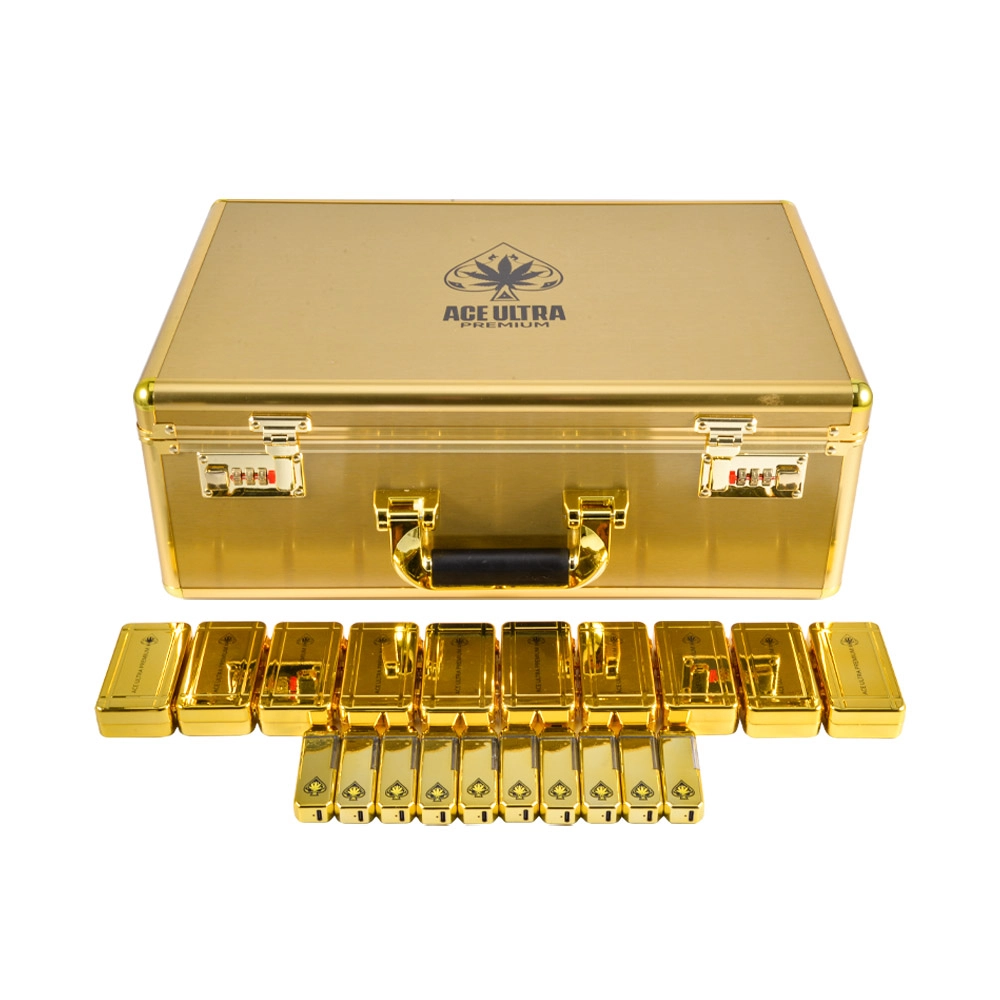
Ace Ultra Gold 2g: Which Retailer Profile Actually Fits a 1000-Piece Case?
Not every wholesale “deal” is actually a fit. With Ace Ultra Gold 2g, the headline number that matters most is not the flavor count or the form factor—it is the case depth. A 1000-piece case changes the decision from “Do I like this SKU?” to “Does my business model really support this inventory position?”
Bottom line: a 1000-piece case is usually the right fit for retailers and distributors that already understand their 2g sell-through, can spread inventory across multiple doors or channels, and treat compliance, receiving, and reorder discipline as part of the buy—not as an afterthought. If you are still testing demand, still refining your flavor mix, or still depending on one location to carry the whole case, 1000 pieces is often too deep.
If you want to benchmark this SKU against the rest of your assortment, start with Ace Ultra Premium Bulk, compare where it sits inside your wider 2g disposable vape strategy, and pressure-test it against other disposable vapes in bulk before committing a full case.
What the live listing tells us right now
As of March 2026, the current Extractsvape listing for the USA Gold Ace Ultra Premium Disposable Vape 2g shows a 1000pcs/box case from the U.S. warehouse, with stepped pricing by box quantity. In plain English, this is not a “sample-heavy” or low-risk test buy. It is a wholesale inventory commitment designed for buyers who already know where the units will go.
- Case pack: 1000 pcs/box
- Warehouse: U.S. warehouse
- Delivery scope: U.S. delivery only
- Quoted delivery window: 3–7 days
- MOQ on this listing: 1000 pcs
The pricing ladder is what makes the decision more interesting. At one box, the listed price works out to roughly $3.77 per unit. At two boxes, the unit cost drops to about $3.28. At four boxes, it is roughly $3.20. At ten boxes, it comes down to about $3.13 per unit. That means the case discount only starts to matter if your business can turn the inventory fast enough for the lower unit cost to outweigh carrying risk.
Why 1000 pieces is a retailer-profile question, not just a pricing question
A deep case works best when three things are already true:
- You know your velocity. You are not “trying Ace Ultra Gold to see what happens.” You are replenishing a format that already sells in your store set or territory.
- You can pool demand. The more locations, routes, or customer accounts you can allocate across, the less dangerous a 1000-piece commitment becomes.
- You have receiving and QC discipline. Larger case buys make small documentation or hardware mistakes more expensive.
That last point matters more than many buyers admit. On the current product page, the battery is described once as 320mah and elsewhere in the specification summary as 310mah. For a small test order, that may feel minor. For a 1000-piece case, it is exactly the kind of detail you should lock in on the final PO, spec sheet, and receiving checklist before you pay.
So who actually fits a 1000-piece Ace Ultra Gold 2g case?
1) The small single-store retailer still testing demand: usually no
If one store is still learning which Ace Ultra variants sell, a 1000-piece case is normally too much inventory concentration. The problem is not only cash tied up in one SKU family. It is shelf opportunity cost. Every extra unit of one product is capital you cannot deploy into proven bestsellers, complementary formats, or faster-moving categories.
For this retailer profile, the smarter move is to buy closer to confirmed winners and preserve flexibility. A single store can absolutely sell through 2g formats over time, but the question is whether that sell-through is fast and predictable enough to justify full-case depth. If the answer is “maybe,” the case is too large.
2) The high-throughput flagship smoke shop or dispensary-style operator: sometimes yes
A single location can fit a 1000-piece case when it has unusually strong repeat traffic, disciplined purchasing, and a narrow enough assortment strategy that the case does not crowd out other core SKUs. This is most plausible for operators who already know their customers respond well to the Ace Ultra form factor, the 2g size class, and this exact presentation.
In other words, a powerful single store can justify a 1000-piece case—but only when it behaves operationally like a small chain: fast turns, clear reorder logic, and a manager who reviews inventory weekly instead of “whenever the shelf looks low.”
3) The 2–10 store chain that can spread inventory across doors: yes, this is the sweet spot
This is the retailer profile that most naturally fits the case. Multi-door operators can break the risk in half immediately by distributing units across stores with different velocity patterns. One location does not need to be perfect. The network absorbs the case.
That is where the U.S.-warehouse setup also becomes more useful. A quoted 3–7 day domestic delivery window makes it easier for chain buyers to run leaner replenishment cycles. Instead of overbuying every time, they can place the larger order when the case economics make sense, then allocate across doors based on actual movement.
For this profile, the case is not just about price. It is about inventory control. Buyers can centralize receiving, spot QC issues early, push units to stronger stores, and protect margin without guessing store by store.
4) The distributor, jobber, or route-based B2B reseller: strongest fit
If you sell into multiple retail accounts, the 1000-piece case is often the most natural commercial fit of all. Distributors care about fill rate, landed cost, account coverage, and reorder timing. A deep case gives them more room to segment inventory by customer type, test which doors deserve replenishment first, and use lower unit cost to protect margin or improve account-level pricing.
For this profile, the real question is not whether 1000 pieces is “too much.” The real question is whether the buyer has enough downstream demand concentration to move the case cleanly without slow-aging inventory. If yes, the case depth becomes an advantage rather than a burden.
5) The opportunistic online reseller with weak ops discipline: no
Buying a 1000-piece case only because the unit price looks attractive is usually how wholesale turns into dead stock. A buyer who lacks receiving controls, documented specs, charge-testing procedures, and a defined sell-through plan can turn a discount into an expensive lesson very quickly.
This is especially true for battery-powered devices. If your business does not already request, file, and verify battery documentation and basic shipment records, a large case adds operational risk—not just inventory risk.
A simple decision rule: when 1000 pieces makes sense
Use this practical rule before you buy:
A 1000-piece case makes sense when you already know where at least 70–80% of the units will go before the PO is placed.
That does not mean every unit must be pre-sold. It means the buyer should already understand the store mix, account list, or channel allocation well enough that the case is a replenishment decision, not a speculation decision.
If you cannot answer questions like these in one meeting, the case is probably too deep:
- Which stores or accounts take the first wave of inventory?
- How many units can each location absorb without bloating back stock?
- What is the review point for reorder versus markdown?
- Who signs off on QC if a spec discrepancy shows up on arrival?
What disciplined buyers should verify before committing the case
Deep-case buyers should verify more than the thumbnail image and headline price. For Ace Ultra Gold 2g, a smart receiving packet should include:
- Final agreed hardware spec on the PO and invoice
- Lot or batch traceability for receiving records
- Battery documentation and the applicable UN 38.3 test summary workflow
- A basic QC plan for packaging condition, charging response, airflow consistency, and cosmetic defects
- A clear internal decision on how many units go to each store, route, or account on day one
This is not bureaucracy for its own sake. It is what separates a professional bulk buy from a price-driven gamble. On battery-powered devices, documentation matters because transport rules and downstream accountability still matter after the shipment arrives.
The commercial takeaway
The retailer profile that actually fits a 1000-piece Ace Ultra Gold 2g case is not simply “anyone who wants a lower price.” It is the buyer with proven 2g velocity, multiple outlets or accounts, and enough operational discipline to control inventory after delivery. In practice, that means multi-door chains, strong flagship stores with repeatable turns, and distributors are the best fit. Small single-store testers and opportunistic resellers usually are not.
So the right question is not “Can I afford the case?” It is “Can my business turn the case cleanly, document it properly, and reorder with confidence?” If the answer is yes, the 1000-piece Gold Ace Ultra listing starts to look rational. If the answer is no, the discount is not a savings—it is just inventory you will carry too long.
FAQ
Is a 1000-piece Ace Ultra Gold 2g case a good fit for one store?
Usually only for a very strong store with repeatable movement in the exact 2g format and enough purchasing discipline to avoid over-concentrating inventory in one SKU family.
Why does the U.S.-warehouse detail matter?
Because a quoted 3–7 day U.S. delivery window supports faster replenishment logic. That can make a deeper case more manageable for buyers who already understand their velocity and do not need to “buy extra just in case.”
What is the biggest mistake in buying a case this large?
Treating it like a price decision instead of an operations decision. Large case buys magnify weak sell-through planning, weak documentation, and weak QC.
What should I confirm before placing a PO?
Confirm the exact hardware specification, battery details, lot traceability, receiving plan, and battery-documentation workflow before payment—especially when the order size turns a small mistake into a large one.
Final word: for Ace Ultra Gold 2g, a 1000-piece case is best viewed as a scale buy, not a discovery buy. If your operation already behaves like scale, it can fit. If not, the smarter move is to keep flexibility and protect cashflow.

0 Comments