

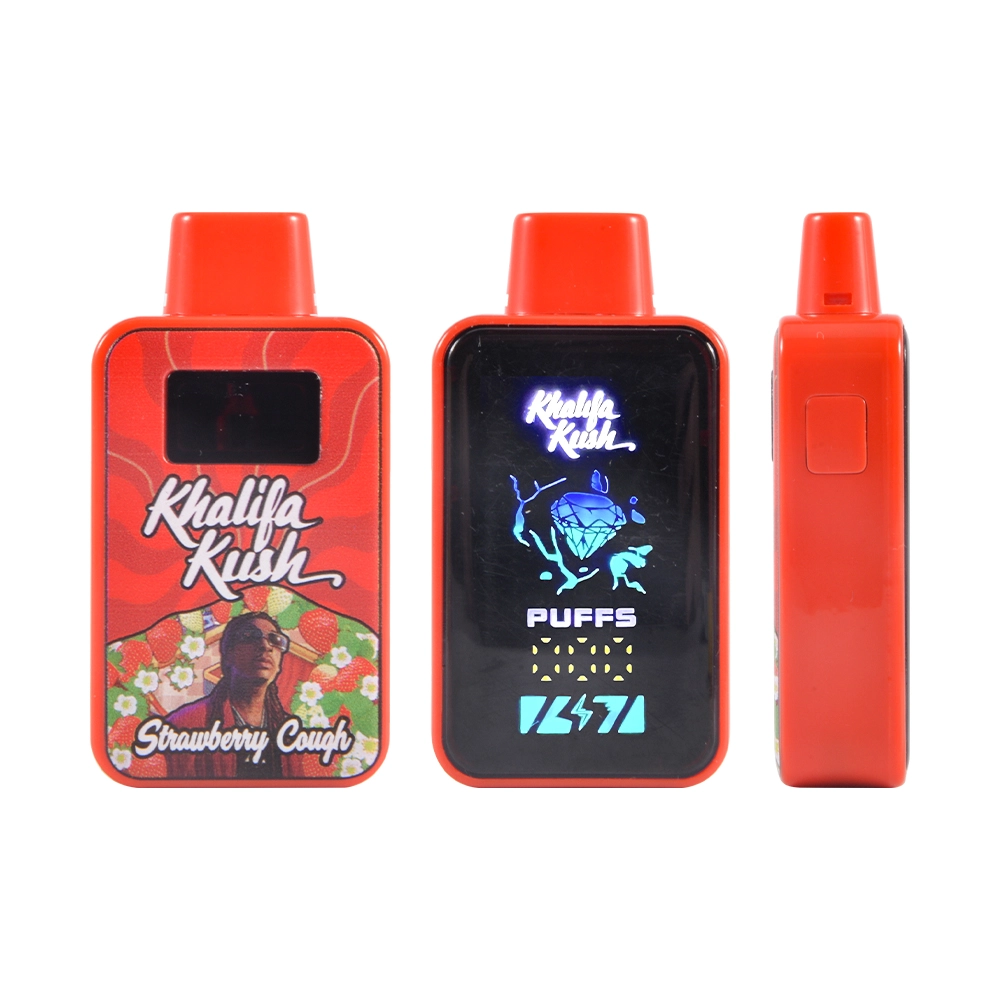
Is Khalifa Kush Disposable Vape Good? A Practical Quality & Authenticity Checklist
“Good” can mean different things: smooth hits, consistent performance, clean ingredients, and—most importantly—authentic sourcing. This guide breaks down what to check before you trust any Khalifa Kush-style disposable, and how to judge whether it’s a solid pick for your use case.
Important: This article is general consumer education. It is not medical advice. Follow local laws and only purchase from legal, regulated channels. On Extractsvape, certain Khalifa Kush listings may be sold as hardware-only (“empty pod”) and ship without oil/liquid—always confirm what you’re buying.
Quick answer: when it can be “good”
A Khalifa Kush disposable can be “good” if (1) it’s authentic and sourced from regulated channels, (2) the contents are backed by a batch-specific COA from a credible lab, and (3) the hardware platform is matched to the oil type so it doesn’t clog, burn, or underperform.
If you’re buying from a catalog that sells hardware-only, “good” means something else: it means the platform’s battery, heater, airflow, and inlet geometry are stable enough to produce repeatable results once filled correctly and legally.
Step 1: confirm what you’re buying (prefilled vs. empty hardware)
Start by checking whether the item is a filled disposable or an “empty pod” (hardware-only). In B2B catalogs, “empty disposable” often means a complete, unfilled all-in-one device platform (battery + heater + reservoir + seals + charging electronics) that ships without oil.
If you’re shopping on Extractsvape, the fastest way to understand the category is this internal guide: empty disposable vapes bulk.
Why this matters: reviews about flavor and effects usually refer to prefilled products in a legal market, while performance complaints (clogs, weak pulls, burnt taste) are often hardware–oil mismatch problems—especially with thicker extracts.
Step 2: authenticity and “where to buy” checks
Counterfeits are the biggest reason people have wildly different experiences with the “same” disposable. Your best protection is to buy through verified, regulated channels—ideally using the brand’s official store locator when available.
- Use official “where to buy” tools when the brand provides them.
- Avoid informal sources (street/unknown online resellers) where chain-of-custody is unclear.
- Be skeptical of “too good to be true” pricing or packaging that looks off (print quality, seals, inconsistent batch info).
Step 3: COA & lab testing—what “legit” looks like
If you’re evaluating a prefilled disposable, a real COA (Certificate of Analysis) should be batch-specific and recent—not a generic PDF reused for multiple runs. At minimum, you want to see potency plus screens relevant to your market (e.g., residual solvents, heavy metals, microbials, pesticides—requirements vary).
How to sanity-check a COA in 60 seconds
- Match identifiers: batch/lot number on packaging should match the COA.
- Check lab credibility: prefer labs accredited to ISO/IEC 17025 (a key standard for testing competence).
- Confirm scope: ensure the COA actually includes contaminant panels relevant to vape extracts (not just potency).
- Look for completeness: clear dates, methods, analyst review, and pass/fail language where applicable.
For wholesalers sourcing hardware platforms, ask the supplier how they handle lot traceability and what documentation follows each run—because repeatability matters as much as unit cost.
Step 4: hardware performance signals (what affects draw consistency)
If you’re judging a Khalifa Kush-style device as hardware, focus on the specs that predict repeatable performance. For example, the Extractsvape listing for a 2g Khalifa Kush-style platform calls out a 2g tank (empty), USB-C charging, a 300mAh battery, 1.4Ω resistance, and 4×1.8mm intake holes—exactly the kinds of details that influence clog risk, heat profile, and usability.
What “good hardware” usually looks like
- Charging: USB-C with stable port fit and predictable charge behavior.
- Battery headroom: enough capacity for the target fill size (2g formats generally demand stronger consistency than 1g).
- Heater match: a resistance/heater design that fits your oil’s viscosity window.
- Inlet geometry: inlet size/count designed to feed thicker extracts without starving the coil or flooding it.
- Build quality: seals, welds/press-fits, and mouthpiece fit that hold up during storage and shipping.
If you want to browse the catalog entry referenced above: Khalifa Kush vapes bulk and the specific platform page: Khalifa Kush 2g disposable vape.
Step 5: safety red flags you should take seriously
Health agencies have linked serious lung injury outbreaks (EVALI) to certain vaping exposures, with strong evidence around vitamin E acetate in some THC vaping products. This is one reason why regulated sourcing, real COAs, and avoiding unknown additives matter.
Red flags
- No batch/lot info, or a COA that doesn’t match the package.
- Seller can’t tell you where the product was legally sourced (or refuses basic verification).
- Harsh “chemical” taste, unusual thickener-like behavior, or repeated clog/burn issues across multiple units.
- Products from informal sources where tampering/counterfeiting risk is high.
If you experience chest pain, shortness of breath, or severe symptoms after vaping, seek medical care promptly.
If you’re a retailer/wholesale buyer: how to reduce returns
“Good” at retail is repeatability: fewer DOA units, fewer clogs, fewer “won’t charge” tickets, and stable customer expectations. The simplest playbook:
- Pilot first: test a small lot before scaling.
- Document acceptance criteria: draw, charging, leak checks, and visual QC.
- Trace lots: keep batch/lot mapping so you can isolate issues quickly.
- Demand paperwork: shipping/compliance docs where required; don’t treat it as optional.
FAQ
Does “2g” mean it will last twice as long as 1g?
Not always. Runtime depends on puff duration, device power, airflow, oil viscosity, and how efficiently the heater wicks. Capacity is only one variable.
Is “live resin” always better?
“Better” is subjective. Live resin often aims to preserve terpene profile, but quality still depends on extraction practices, post-processing, and contaminant control. A clean, well-tested distillate product can outperform a poorly made “live resin” every day of the week.
What’s the #1 way to avoid a bad experience?
Buy from regulated channels, verify authenticity, and insist on a batch-specific COA from a credible lab. That’s the biggest lever you control.
0 Comments