

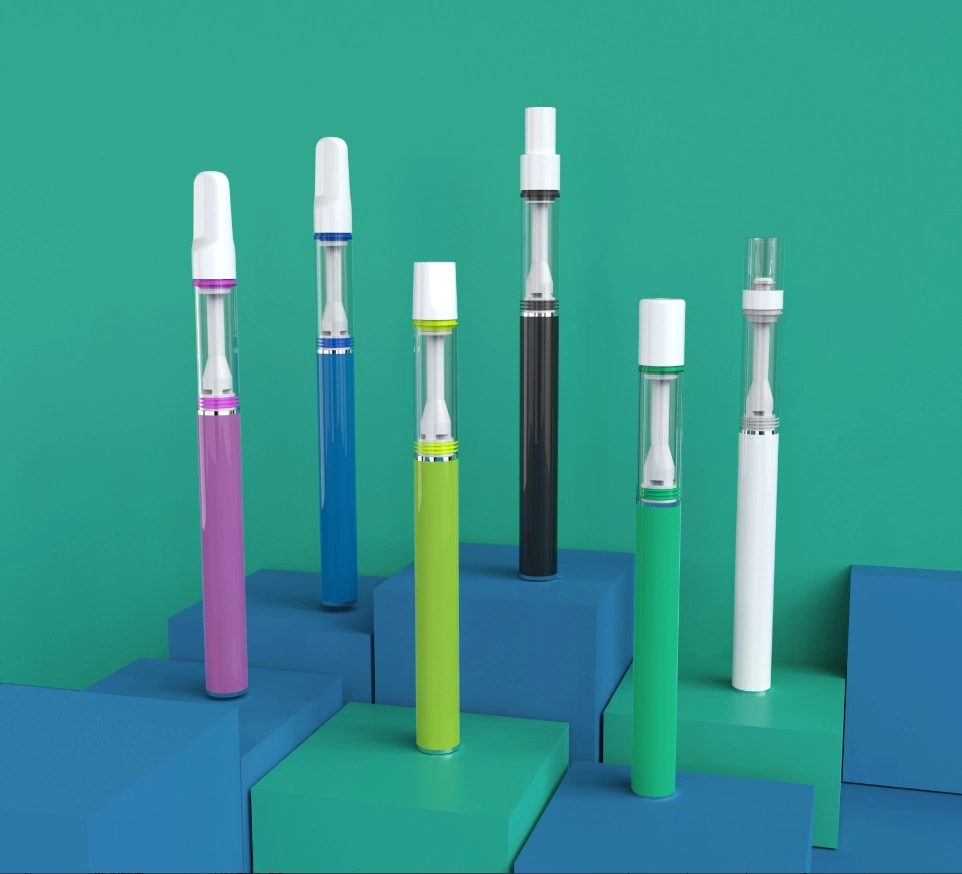
Empty Disposable Vape: What You’re Actually Buying
Important note: This article is about empty disposable vape hardware only. Devices ship without oil, nicotine, THC or CBD. You bring the licensed formulation and compliance; suppliers like Extractsvape provide the hardware platforms.
If you’re sourcing “empty disposables” for a brand, white-label program or filling facility, you’re not just buying a shell with a logo. You’re buying an engineered system (coil, seals, battery, charge board, packaging) plus a bundle of test data, paperwork and risk assumptions that will follow every batch you fill.
This guide breaks down what “empty disposable vape” really means in 2025, how it differs from cartridges and pod systems, and what you should actually inspect before locking in your next platform.
1. What “empty disposable vape” means in wholesale
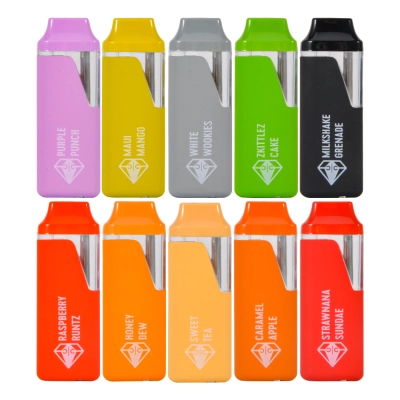
On a B2B catalog, “empty disposable” is shorthand for a pre-assembled all-in-one device that ships unfilled. The unit arrives as a complete platform:
- Lithium battery and protection circuit
- Ceramic or mesh heater and wick system
- Reservoir body (typically 1–3 grams of oil capacity)
- Mouthpiece, seals, and welds or press-fits
- Draw sensor, optional screen and USB-C charge path
When you scroll through empty disposable vapes bulk on Extractsvape, every listing in that collection is a hardware-only SKU. You (or your licensed partner) handle the formulation, filling, local registrations and tax/license footprint. The empty device is the standardized platform underneath your artwork and flavor lineup.
2. Under the shell: what you’re actually paying for
Most bulk buyers focus on price per unit and brand art. In practice, what you’re paying for is the behavior of the device over thousands of fills and shipments. A serious empty disposable platform is defined by a few non-negotiables:
2.1 Battery & protection circuit
The lithium cell, charge IC and protection stack control:
- How reliably the device charges (and recharges) under normal use
- Whether short-circuit and over-charge/over-discharge protection actually trigger
- How the device behaves in warm warehouses and long parcels
For modern programs, buyers increasingly ask for design testing to international transport standards (UN 38.3) and for lithium battery test summaries from manufacturers, because freight partners, insurers and regulators expect this paperwork to exist.
2.2 Heater, inlet and airflow stack
The coil, oil inlets and airflow path determine leak rates, clog risk and consumer satisfaction:
- Coil architecture: Mesh vs. ceramic and how it handles higher-viscosity distillate, live resin or rosin.
- Inlet geometry: Number and diameter of holes, tuned to the viscosity window you actually fill.
- Airflow path: Resistance (“tightness” of draw), whistle risk and consistency across the lot.
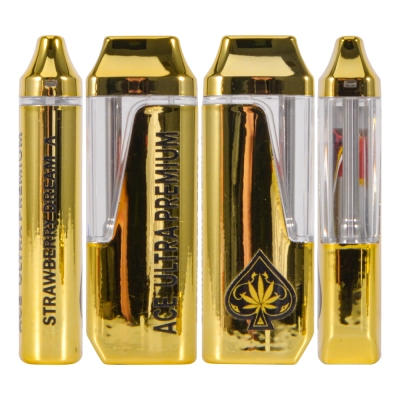
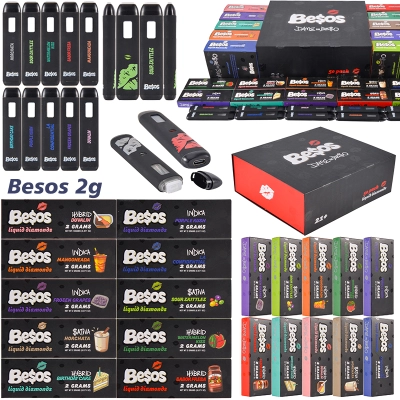
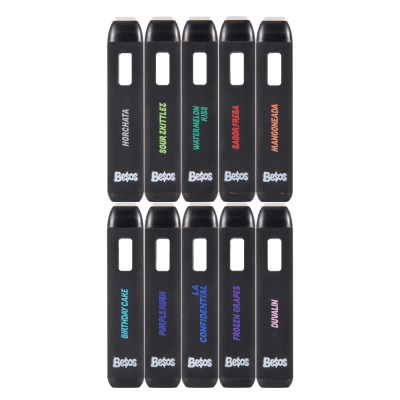
When you see brand-style shells for names like Muha, Packman, Whole Melt or Besos, the outer art changes, but the critical behavior comes from this internal stack.
2.3 Seals, welds and reservoir materials
What you’re also buying is how the device behaves after three to eight weeks of real-world storage and shipping:
- Seal compression and gasket design (upright vs. inverted storage)
- Ultrasonic welds or press-fits at the tank and mouthpiece
- Reservoir materials that tolerate your terpene system and temperature profile
Leak statistics and RMA rates are rarely “bad luck” – they’re the direct output of the engineering choices in this stack plus your oil pairing and packaging.
3. Empty disposables vs. cartridges vs. pod systems
The term “empty” gets used loosely in wholesale. A quick way to decode listings:
- Empty disposable: Unfilled AIO device, usually rechargeable and fully branded once you apply art.
- Empty 510 cartridge: Tank only, designed to pair with a separate 510 battery ecosystem.
- Empty pod (closed pod system): Small cartridge designed to pair with a reusable device body.
Empty disposables are popular when you want a fixed, predictable experience: same housing, same coil, same airflow, just different flavors or formulations. Cartridges and pod systems are better when your strategy is long-life device ecosystems or when regulation and tax structures favor refill formats.
4. Capacity, format and why 2g became the default
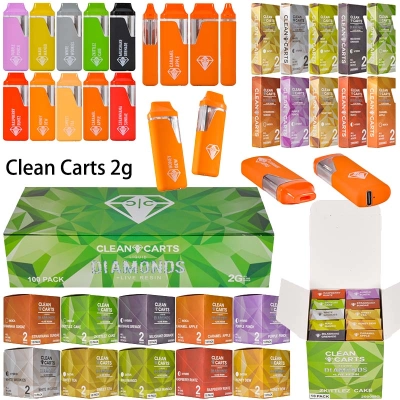
Over the past few seasons, the center of gravity in many legal cannabis and hemp markets has shifted from 1g to 2g devices for mid-to-premium programs. For most teams, the workhorse format is a 2-gram AIO – exactly the kind of base platforms listed under the 2g disposable wholesale category.
Why 2g?
- Retail economics: A slightly higher ticket with a better “cost per gram” story for the consumer.
- Operational simplicity: Fewer SKUs vs. mixing 1g and 2g across every flavor.
- Design headroom: More internal volume for larger batteries, dual chambers or screens.
From a hardware perspective, what matters is that the coil, inlets and battery spec are tuned to your fill mass and target puff count. A design that works at 1g can behave very differently at 2g if the battery, heater and airflow are not adjusted to match.
5. The hidden bundle: testing, documents and logistics
An empty disposable shipment is never just “devices in boxes.” For serious brands, each platform is tied to a small library of compliance and logistics documents, including:
- Lithium battery transport compliance: Evidence that the cell design has passed UN 38.3 design tests and that a current lithium battery test summary exists.
- Electrical safety evaluations: Many buyers now treat testing to standards such as UL 8139 (electrical systems of electronic cigarettes and vaping devices) as a strong signal that the charge path and protection circuits were independently reviewed.
- Packaging/transport testing: Parcel-reality simulations (e.g., ISTA 3A) help ensure retail cartons and master cases survive drops and vibration in UPS/FedEx/DHL networks without crushing devices.
- Basic materials and RoHS declarations: Especially when selling into the EU or UK where extended producer responsibility and WEEE rules interact with electronics.
At a practical level, you want to know: Does my supplier have this paperwork, and will they share it with my logistics and regulatory teams under NDA when needed?
6. Regulatory context: devices vs. what goes inside
Even when a device ships empty, regulators in many countries treat vape hardware as part of electronic nicotine delivery systems (ENDS) or similar categories once it’s used for nicotine or cannabis products. In the U.S., for example, FDA’s tobacco division regulates the manufacture, import, packaging, labeling, advertising, promotion, sale and distribution of ENDS, including many components and parts such as batteries, tanks, and displays.
That doesn’t make empty hardware “illegal,” but it does mean that your licensed partners and legal counsel should review how a specific platform fits into your overall compliance strategy. Never treat an empty shell as a shortcut around local law – treat it as one component in a regulated system.
Non-legal disclaimer: This article is for hardware buying and technical education only. Always consult qualified legal and regulatory professionals for your specific markets.
7. How to evaluate an empty disposable platform in 2025
Before adding a new platform to your brand, run it through a structured checklist:
7.1 Define the technical spec up front
- Target oil type and viscosity window (distillate, live resin, rosin, blended).
- Target fill weight and expected puff count.
- Required features (USB-C, screen, dual chamber, pre-heat, child-resistant features, etc.).
7.2 Pilot fills and stress tests
- Fill small lots (e.g., 50–200 units) on real lines.
- Rest samples upright and inverted at realistic storage temperatures.
- Run vibration/drop simulations or ship test cartons through your usual parcel carriers.
- Measure leak rate, clogging, off-flavors, dead-on-arrival units and charge failures.
7.3 Commercial clarity and RMA rules
- Document MOQs, lead times and price breakpoints at each tier.
- Confirm how DOA units and in-field failures are handled (photos, returns, credit notes).
- Align on acceptable cosmetic defect rates for B2C packaging.
The goal is to turn “I like how this hits” into well-defined acceptance criteria that your supplier and your internal team can repeatedly measure.
8. Where empty disposables fit in your brand roadmap
Most teams start on mature, brand-style platforms to de-risk early drops and then gradually move into more tailored designs. Once your core SKUs stabilize, you may shift part of the lineup to custom vapes that reflect your brand’s industrial language, user interface and long-term positioning.
Empty disposables are the bridge between those two phases. They give you:
- A known engineering baseline for your oil.
- Predictable RMA and leak behavior once dialed in.
- Room to grow into custom shapes, charge behaviors and UX once the business case is proven.
9. Key takeaways for buyers
- “Empty disposable” means a full device platform without oil – you’re buying engineering, not just shells.
- The real value sits in coil design, seals, battery safety and packaging performance over thousands of units.
- Regulators and carriers increasingly expect credible battery, electrical and packaging test documentation behind each platform.
- A structured pilot and acceptance-criteria workflow turns your next empty device from a gamble into a repeatable SKU.
If your team is mapping out the next season of releases, treat empty disposable hardware as the foundation of your product line, not an afterthought. The better you understand what you’re actually buying, the fewer surprises you’ll see once real customers start hitting “add to cart.”

0 Comments