

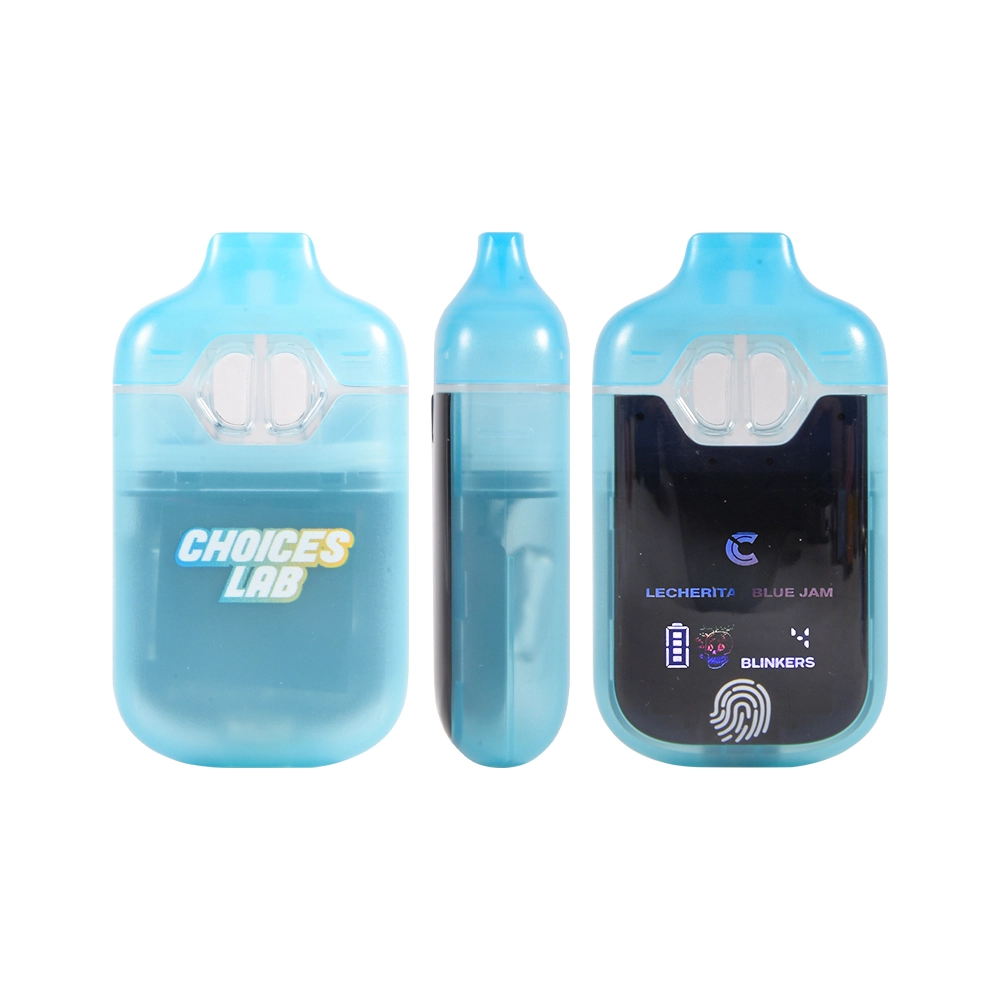
How to Buy ChoicesLab Vape in Bulk Safely Online
Buying in bulk is where small issues become expensive: one bad lot can mean chargebacks, support tickets, delayed fulfillment, and stranded inventory. This guide is a practical, buyer-side checklist to help you source ChoicesLab devices online with fewer surprises—by verifying what you’re buying, requiring the right documents, and running a repeatable sample→pilot→production process.
Start here: choiceslab vape bulk | Vape with Screen | 2 gram disposable vape bulk
1) Confirm what you’re actually buying (hardware-only vs finished goods)
“ChoicesLab vape” can describe different things across listings: a device platform (hardware), a packaged retail unit, or a finished product. Before you compare prices, standardize your definition in writing:
- Format: single tank vs dual chamber / dual flavor
- Capacity class: how your team defines “2g” for your intended use
- Device features: screen / indicator, draw activation, preheat, charging interface
- What’s included: device only, device + packaging, or finished goods (where legal)
2) Buy only inside a legal, accountable supply chain
“Safe” isn’t only about device quality—it’s also about legality and traceability. If your program involves any consumables (nicotine or cannabinoids), the safest buying move is operating only within licensed, regulated channels in your jurisdiction, with clear labeling and accountability. Public-health investigations have repeatedly linked serious harm to informal/illicit sourcing and unknown additives in vaping products.
What “accountable sourcing” looks like
- Documented origin: batch/lot identifiers and consistent packaging details
- Transparent testing: where applicable, batch-linked lab results from credible labs
- Age-gating & compliance: your downstream sales flow matches local requirements
If you sell hardware-only, keep hardware procurement separate from consumable compliance: validate platform repeatability first, then scale only through compliant operations.
3) Verify the seller like a finance team (not like a shopper)
Bulk fraud rarely looks like “obvious scam.” It looks like rushed urgency, vague documents, and just enough proof to get you to wire funds. Use a verification checklist before you place a serious order:
| Verification item | What you should ask for | What “good” looks like |
|---|---|---|
| Business identity | Company name, registration, physical address, invoice details | Matches public records, consistent on PI, email domain, and payment recipient |
| Inventory proof | Timestamped warehouse photos/video + carton labels | Labels show SKU/lot/carton count; visuals match listing photos and packaging version |
| Operational capability | Pick/pack process, dispatch SLA, tracking examples | Clear warehouse location, realistic timelines, trackable carriers |
| Samples & pilot orders | Sample pack + a small pilot from the real production/stock source | Seller supports staged buying and agrees to acceptance criteria |
| Returns/RMA policy | DOA terms, defect thresholds, replacement/credit workflow | Written policy tied to QC evidence (photos/videos, lot IDs) |
4) Require the right safety & shipping documents (battery rules)
Most bulk shipping delays eventually become a battery/documentation issue. Disposable devices are battery-powered products, and carriers commonly expect evidence of lithium-battery transport testing and proper packaging/hazard communication.
Documents to request before payment
- UN 38.3 evidence tied to the battery/cell configuration used in the lot
- Lithium Battery Test Summary (often requested by carriers/partners)
- Shipping classification + packaging plan aligned to the mode (air/ground) and destination
- Device electrical safety testing where applicable to your market (e.g., UL 8139 scope for vape electrical systems)
Do accept: A test summary you can match to your exact battery/cell configuration and production lot documentation.
If your shipments move by air (or touch air networks), also plan for stricter carrier requirements and documentation checks.
5) Lock a “no-surprises” spec: platform, QC, and change control
Bulk success is mostly boring: the same draw, the same charging behavior, the same leak rate—every time. The easiest way to protect repeatability is to freeze a platform definition and prevent silent substitutions.
Write these into your RFQ / PO
- Platform definition: heater type, airflow/inlet geometry, seal stack, reservoir/tank spec
- Electrical definition: battery capacity band, charging interface, protections (overcharge/short protection)
- Cosmetic definition: packaging version, labels, device markings, screen behavior (if present)
- Change control: “No change without written approval” for the parts that drive returns
If you’re buying screen devices or dual formats, the platform definition matters even more because there are more failure points (UI, connectors, dual seals/paths).
6) Run a sample → pilot → production plan (with acceptance criteria)
The safest way to scale isn’t “buy bigger.” It’s stage-gate buying:
| Stage | Order size | Goal | What you test |
|---|---|---|---|
| Sample | Small | Confirm platform fit + basic build consistency | Activation, airflow consistency, charging, visual QC, packaging integrity |
| Pilot | Small-to-mid | Measure real defect rate from the real stock/line | Leak checks, warm storage, drop/vibration simulation, UI/screen checks |
| Production | Full | Scale with repeatability | Receiving QC + ongoing lot tracking (defect trends over time) |
7) Protect payment: terms, chargebacks, and fraud signals
Payment safety is procurement safety. In bulk, the goal is to keep leverage until you’ve verified the right things. Use structured terms that match your stage-gate plan.
Practical payment protections
- Pay in stages: sample → pilot → production (avoid paying “big” before verifying “small”)
- Use a proper PI: SKU, packaging version, carton counts, warehouse location, dispatch SLA, and doc list
- Choose safer rails: methods with dispute/recourse where possible
- Align terms to QC: DOA/defect credits require evidence + lot IDs
Fraud signals that should slow you down
- Payment beneficiary name doesn’t match the company on the invoice
- Refusal to provide test summaries or “only screenshots” of documents
- Unrealistic lead times + pressure tactics (“pay in 2 hours or price doubles”)
- Too-good-to-be-true pricing with vague specs
8) Receiving QC checklist for ChoicesLab formats (screens / dual chambers)
Your receiving QC does not need to be complicated—it needs to be consistent. Below is a buyer-friendly checklist that catches the most common return drivers early.
Quick receiving checklist (do this on every lot)
- Carton sampling: pull random cartons; verify labels, counts, and packaging version match the PI
- Visual QC: ports, seams, mouthpiece fit, screen alignment (if present), obvious cosmetic damage
- Functional QC: activation consistency, indicator behavior, charging across multiple cables/adapters
- Leak risk check: orientation changes + short warm-storage hold (even hardware-only benefits from packaging stress checks)
- Lot traceability: record lot/run identifiers so you can isolate issues and prevent repeat failures
9) Red flags that mean “walk away”
- No traceability: no lot IDs, no consistent packaging versions, no accountability on defects
- Doc avoidance: can’t provide UN 38.3 evidence/test summaries tied to the lot
- Spec drift: “Same as sample” but photos/specs keep changing
- Shipping vagueness: no clear warehouse, carrier, or realistic dispatch window
- Support opacity: no written DOA/RMA workflow
Bottom line
The safest bulk buy is the one you can repeat: stable platform, stable documentation, stable lots. Don’t buy hype—buy process. If you want to reduce risk fast, start with a sample, run a pilot from the real stock source, and only then scale.
FAQ
Is UN 38.3 really a big deal for disposable vape shipments?
Yes. Disposables are lithium-battery products. Carriers and downstream partners often expect UN 38.3 transport testing evidence and may request a lithium battery test summary, especially when shipments are moving through air networks.
What’s the single best way to avoid bad bulk orders?
Stage-gate buying: sample → pilot → production, with written acceptance criteria and a “no-change without approval” agreement on the parts that drive returns (battery, heater, seals, airflow, UI).
If I’m buying online, what should be in my pro-forma invoice (PI)?
SKU + packaging version, carton counts, warehouse location, dispatch SLA, tracking expectations, required documents list, and DOA/RMA terms. If it’s not written, it’s not real.
Further reading (authoritative)
- PHMSA Lithium Battery Guide (U.S. DOT)
- IATA Lithium Battery Guidance Document
- UN 38.3 transport testing overview (Intertek)
- UL 8139 scope for vape electrical systems (UL)
- IEC 62133-2 (portable lithium battery safety standard)
- CDC background on EVALI and risks linked to illicit THC vaping products
- FDA consumer warning on THC-containing vaping products (historical update)
Disclaimer: This article is for informational purposes only and does not constitute legal or medical advice. Always comply with local laws, licensing requirements, and age-restriction rules applicable to your market.
0 Comments