

What You Need to Know Before Buying 2g Disposable Vapes in Bulk
Buying “2g” disposables at scale is less about chasing the lowest unit price and more about controlling repeatability: the same draw, the same leak rate, the same charging behavior, and the same packaging integrity from your first carton to your tenth reorder.
Important compliance note: This guide focuses on device platform and procurement controls. If your program involves any consumables (nicotine or cannabinoids), only operate within a licensed, legal supply chain and follow local regulations for manufacturing, testing, labeling, and age-gating.
1) Define “2g” the right way (so you don’t buy the wrong SKU)
In bulk purchasing, “2g” is often used as a shorthand capacity class, but it can be interpreted differently across markets and listings. Your first job is to standardize a single definition in your RFQ and PO so suppliers can’t swap equivalent-looking devices that behave differently.
Use a “capacity + platform” definition
- Capacity class: Ask the supplier to state reservoir volume (mL) and the intended fill mass range (g) for your oil type.
- Platform: Heater type (ceramic/mesh), airflow/inlet geometry, and seal stack design.
- Electrical system: battery capacity band, charging interface (USB-C), and protections.
Why this matters
Most bulk failures are “spec mismatch” failures: the oil is fine, the box is fine, but the platform is slightly different than your approved sample—leading to clogging, leaking, or weak pulls. When you lock “2g” to a documented platform, reorders stop being gambles.
If you’re comparing options, start from a curated category page rather than a single listing: wholesale disposable vapes.
2) Regulatory reality: what changes when you buy in bulk
The bigger your order, the more your risk shifts from “product doesn’t sell” to “product can’t ship, can’t be stocked, or can’t be legally marketed.” Bulk buyers should treat compliance as a logistics and documentation problem as much as a legal one.
Separate hardware procurement from consumable compliance
Many serious programs source hardware independently and only fill through licensed operations. This reduces legal exposure and makes QA simpler: you can validate the device platform (leak resistance, charging behavior, draw consistency) before you ever scale production.
Age-gating, marketing, and market authorization (where applicable)
If your products fall under tobacco/vapor rules in your target market, ensure your downstream sales channels meet local requirements. In the U.S., FDA regulates tobacco products (including e-cigarettes) and controls market authorization pathways for new tobacco products.
3) Battery safety & shipping documentation (UN 38.3, air cargo rules)
Almost every bulk delay story eventually becomes a battery story. Even when the device is “small,” it’s still a lithium battery product moving through carriers, warehouses, and sometimes air networks—each with documentation expectations.
The must-have docs for bulk shipments
- UN 38.3 test evidence for the battery/cell type used in the device platform.
- Lithium Battery Test Summary (TS) (often requested by carriers and downstream partners).
- Proper shipping classification aligned to the applicable air/ground rules for battery-powered devices.
Practical buyer tip
Don’t accept “we have UN38.3” as a sentence. Ask for the test summary and match it to your exact battery/cell configuration used in the production lot you’re buying. If the supplier swaps the battery vendor after sampling, your paperwork may no longer match the shipment.
4) Materials, metals, and why “disposable” needs stricter QA
Disposables are compact, cost-pressured devices. That combination can amplify variability in heater metallurgy, solder quality, or component coatings. Recent research attention has focused on the possibility that some disposable devices can emit higher levels of metals/metalloids over device life—one more reason bulk buyers should run a tighter incoming inspection and supplier control plan.
What to request from a supplier (hardware side)
- Bill of Materials (BOM) stability statement: what parts cannot change without written approval
- Materials declarations for wetted-path components (reservoir, seals, mouthpiece)
- Process controls for heater assembly, soldering, and cleaning
What to test before scaling
- Early-life vs end-of-life performance (draw, heat profile, leakage)
- Warm storage (warehouse and transit conditions)
- Component variability across lots (two lots is not a trend—test three)
5) Performance specs that predict returns (clogs, leaks, weak hits)
Your goal is not a perfect spec sheet—it’s a platform that stays consistent across thousands of units. Below are the most predictive “return drivers” to lock down in your RFQ.
Return-driver checklist
| Spec area | What to define in writing | Why it matters in bulk |
|---|---|---|
| Seal stack & tank | Gasket materials, weld method, leak test standard | Controls leaks during warm storage + transit vibration |
| Inlet/airflow geometry | Inlet count/diameter, airflow path, tolerance limits | Prevents viscosity mismatch issues and inconsistent pulls |
| Heater type | Mesh/ceramic type, assembly process, resistance window | Reduces burnt taste complaints and early failures |
| Battery & charging | Capacity band, USB-C port spec, protection behavior | Reduces “won’t charge” tickets and DOA |
| Firmware/UI (if any) | Screen logic, puff counter behavior, lockouts | Avoids customer confusion and support load |
Start from proven platform categories
If your buyers care about UI consistency and fewer “how does this work?” messages, consider platforms designed around display UX: vape with screen wholesale.
6) Screens & dual formats: what to test before committing volume
Screen devices: test for real-world failure modes
- Drop + vibration: screen and connector robustness after transit-style abuse
- Charging edge cases: partial-charge behavior, overcharge protection, port wobble
- UI clarity: battery indicator accuracy and consistent puff counter logic
Dual-chamber / dual-tank formats: “cool feature,” extra QA
Dual systems can increase satisfaction for some programs, but they also multiply potential leak points and airflow complexity. If you go dual, require a pilot run and test it harder than single-tank SKUs.
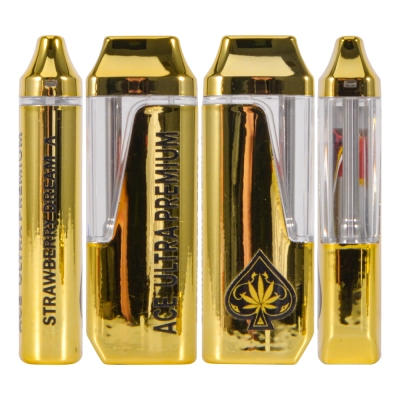
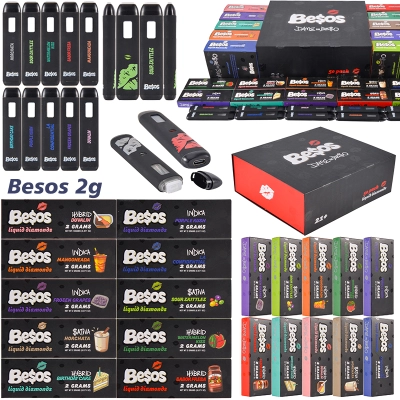
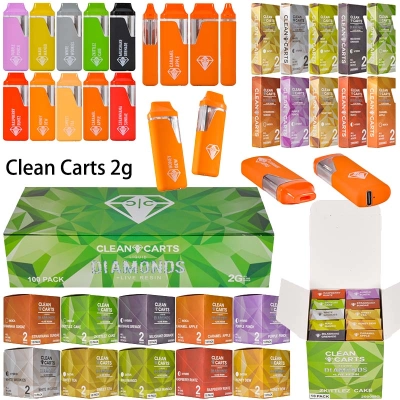
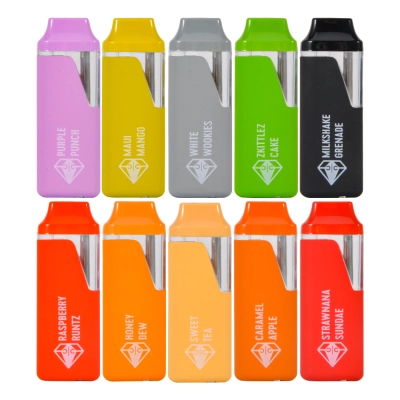
Example of a documented 2g platform listing you can use as a spec reference point in your sourcing discussions: 2g disposable thc vape.
7) A practical bulk QC plan (sample → pilot → production)
Bulk procurement fails when buyers treat sampling as “does it look right?” Your QC plan should validate repeatability under stress, not just first impressions.
Phase A: Pre-production sample gate
- Confirm the platform definition (BOM, heater type, battery, inlet geometry)
- Run warm-storage and leak checks (include packaging + orientation changes)
- Verify charging behavior across multiple cables/adapters
Phase B: Pilot order gate (the most important step)
- Order a small pilot from the intended production line (not “special samples”)
- Measure failure rate, draw consistency, and packaging damage rate
- Lock the “no-change” components and document an approval workflow for any substitutions
Phase C: Production receiving checklist
- Random carton sampling + visual inspection for seals, ports, screen alignment
- Functional tests: draw, preheat/activation logic, charging, indicator behavior
- Record lot/run IDs so reorders improve (and bad runs don’t repeat)
8) Packaging & labeling: preventing chargebacks and compliance headaches
Packaging is not decoration in wholesale—it’s a compliance and returns-control system. In regulated markets, child-resistant packaging requirements may apply to finished goods, and labeling rules can vary by jurisdiction. Even when you sell hardware-only, your packaging still affects damage rates and perceived quality.
Bulk packaging must do three jobs
- Protect: reduce screen cracks, port damage, and leak incidents caused by transit stress
- Identify: clear versioning (run IDs / edition names) to prevent “same listing, different box” disputes
- Comply: ensure your downstream packaging/labeling workflow matches your target market requirements
9) Supplier scorecard: questions to ask before you wire money
Platform control
- What parts are “locked” after approval, and what can change without notice?
- Will you provide a written BOM and notify us of substitutions before shipment?
Documentation readiness
- Can you provide UN 38.3 evidence and battery test summaries tied to the production lot?
- Can you support carrier documentation requirements for air/ground shipping?
Commercial terms that reduce risk
- Pilot order option before full MOQ
- Clear DOA/defect policy and how defects are verified
- Lead time guarantees and penalties for unapproved substitutions
10) Buying math: landed cost, yield, and support burden
Your “best deal” is the SKU with the lowest total cost after accounting for: defect rate, returns, reships, customer support time, chargebacks, and slow-moving inventory from inconsistent experience.
Use a simple bulk decision formula
True unit cost ≈ (Landed unit price) + (Expected defect cost) + (Support/returns cost) + (Compliance friction cost)
If you don’t track these numbers today, start with a spreadsheet and a pilot run. Even basic metrics (DOA rate, leak rate, “won’t charge” tickets) will immediately show which suppliers deserve volume.
FAQ
Is “2g” the same as “2mL”?
Not always. “g” is a mass unit and “mL” is a volume unit; equivalence depends on the density of the oil. For procurement, require the supplier to state reservoir volume (mL) and the intended fill mass range (g) for your product type.
What documents should I ask for before buying in bulk?
At minimum for battery-powered devices: UN 38.3 evidence and lithium battery test summaries tied to the battery/cell type used in your lot. For finished-goods programs, add market-specific compliance/testing/labeling documentation required in your jurisdiction.
What’s the safest way to scale volume?
Sample → pilot → production, with a written “no-change without approval” agreement on the critical parts that drive returns: seals, heater, airflow/inlet geometry, battery/charging, and UI behavior.
Final take: buy repeatability, not hype
Bulk success is boring on purpose: stable specs, stable documentation, stable lots. If you enforce platform definitions, shipping-ready battery paperwork, and a real QC gate between sample and scale, 2g-class devices can be a dependable wholesale category instead of a constant returns battle.
References (authoritative reading)
- PHMSA — Lithium Battery Test Summaries (UN 38.3)
- IATA — Lithium Battery Guidance Document (2025–2026 framework)
- UL — UL 8139 certification overview for vaping electrical systems
- FDA — Deeming regulations (U.S. tobacco/vapor regulatory framework)
- CDC (MMWR) — Vitamin E acetate linked to the EVALI outbreak
- ACS — Metals found in some disposable e-cigarette vapor (June 2025)
- California DCC — Child-resistant packaging overview (example of regulated-market packaging expectations)

0 Comments