

Mesh vs Ceramic: Which Coil Tech Is Safer for High-Viscosity Oils in Empty AIOs?
Hardware-only note: ExtractsVape supplies empty devices (no oil, no nicotine, no THC). Always follow local regulations for filling, testing, packaging, and sale of finished products.
Choosing between mesh and ceramic coils in empty AIOs starts with how your thick oils behave under heat.
Why Coil Choice Matters More for Thick Oils
In an empty all-in-one (AIO) disposable, the coil is the heart of the device. It sets the temperature profile, how quickly oil moves through the wick, and how often your support team hears about clogs, burnt hits, or “light on but no vapor” complaints. With high-viscosity distillates, live resin, rosin, or liquid diamonds, the stakes are even higher:
- Too cool and the device floods, gurgles, or fails to vaporize consistently.
- Too hot and you risk scorched terpenes, unpleasant taste, and more aggressive thermal stress on materials.
- Unstable materials can increase the chance of heavy-metal or degradation by-products showing up in emissions testing.
In other words, “safer” coil technology in empty AIOs isn’t just about flavor preference — it’s about engineering a system that plays nicely with thick oils, third-party lab tests, and real-world user behavior.
How Mesh Coils Behave with High-Viscosity Oils
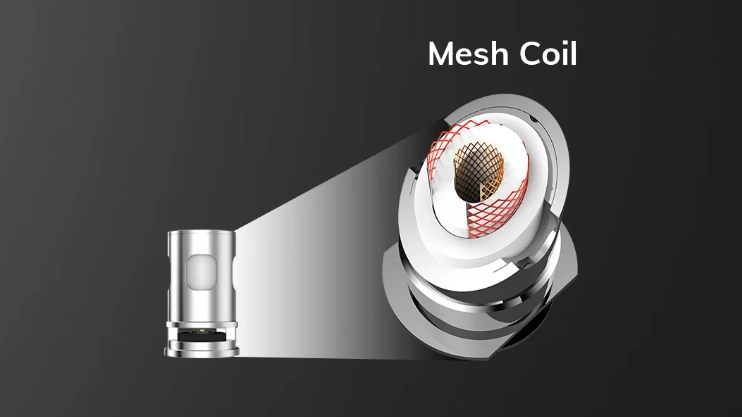
Mesh coils replace a single wire with a thin, perforated metal strip. Because that strip has a much larger surface area, it heats more evenly and reaches temperature faster than a traditional round wire coil. In nicotine vapes this is associated with fewer hot spots, richer flavor, and more consistent performance across a puff’s duration.
For thick cannabis oils in empty AIOs, that geometry has some clear pros and cons:
Advantages of Mesh in AIOs
- Even heat distribution: reduced hot spots can lower the risk of localized overheating at the oil–wick interface.
- Fast ramp-up: mesh reaches operating temperature quickly, so users get vapor with shorter puffs and less “pre-burning.”
- High surface area: more active area in contact with oil can help when you pair the coil with the right port geometry and pre-heat logic.
Risks to Manage with Mesh
- Wicking margin is tight. Mesh coils can vaporize oil very quickly; if the wick can’t keep up (especially with cold, viscous oil), the coil runs partially dry and spikes in temperature.
- Power windows are narrow. Sub-ohm mesh (common in big cloud devices) is usually a poor match for 1–2 g AIOs unless you lock in a conservative power curve.
- Line-trial dependency. Mesh AIOs almost always require more pre-heat and puff-profile testing across oil types and ambient temperatures before you can call them production-safe for thick formulations.
If you like mesh for its flavor and responsiveness, you’ll want an engineering-driven vendor and a strict pilot protocol before committing to large orders.
How Ceramic Coils Behave with High-Viscosity Oils
Ceramic coils for oil vapes typically use a microporous ceramic rod or cup with an embedded heating element. The tiny pores pull viscous oil toward the hot zone more slowly but more evenly than many cotton-only wicks. This is why ceramic remains the dominant choice in many 1 g and 2 g empty AIO formats built for distillate and live resin.
Advantages of Ceramic in AIOs
- Forgiving with heavy oils. The slower wicking and thermal mass of ceramic help smooth temperature spikes, which can reduce harsh, over-cooked hits when users chain-vape or hit the device hard.
- Stable flavor over time. Ceramic cores tend to resist gunking and burnt spots when you pair them with mid-power ranges (often around 1.2–1.6 Ω and 3.0–3.7 V in many AIO designs), which is helpful for multi-gram fills.
- Well-understood for compliance labs. Many state cannabis labs have years of data on ceramic-based AIOs, making it easier to compare your results to known baselines when you validate hardware.
What Ceramic Does Not Guarantee
- “Ceramic” doesn’t mean “no metal.” Most ceramic coils still hide metal leads or heater traces inside the core. The marketing term “full ceramic” usually refers to the oil-wetted path (center post, inlet, mouthpiece), not total elimination of metals from the device.
- Heavy-metal risk depends on the whole system. Recent cannabis and e-cigarette studies show that metals like lead, nickel, chromium and others can be detected in liquids and aerosols across multiple hardware types. Coil material is only one factor: solder, plating, manufacturing cleanliness, storage conditions, and oil chemistry all matter.
- Poor design can still run too hot. A ceramic rod driven at excessive power, without pre-heat control or proper airflow, can still over-cook oil and stress seals or plastics around it.
The practical takeaway: ceramic is often more forgiving with high-viscosity oils, but it still requires a tightly specified design, a clean bill of materials, and independent emissions testing before you rely on it for large-scale fills.
Mesh vs Ceramic for Safety: A Practical Comparison
| Factor | Mesh Coil AIO | Ceramic Coil AIO |
|---|---|---|
| Heat distribution | Very even across a large surface area; fast ramp-up but can out-run wicking on thick oil. | More localized heat but buffered by ceramic mass; typically slower and more controlled. |
| Dry-hit / scorching risk | Low when wicking keeps up; higher risk if ports are undersized or oil is very cold/viscous. | Generally lower, especially in the 1.2–1.6 Ω range with moderate power and pre-heat. |
| Clogging behaviour | Can re-liquefy clogs quickly if pre-heat is tuned correctly; poor tuning can bake residue. | Gradual heat helps loosen clogs; less aggressive but usually more consistent for heavy oils. |
| Metals & materials | Typically exposed metal mesh; performance depends on alloy, plating, and manufacturing quality. | Oil-wetted path can be mostly ceramic, but embedded metal heaters still exist; metals still must be tested. |
| Best fit (today) for high-viscosity oils | Specialized AIOs where you can tightly control power, pre-heat, and intake sizes through validation. | Most mainstream 1–2 g cannabis AIOs; widely adopted baseline when paired with robust lab testing. |
In practice, the “safer” choice is whichever coil platform passes your heavy-metals, emissions, and reliability testing under realistic fill, storage, and usage conditions — not just what’s printed on the spec sheet.
Engineering Checklist for Safer Empty AIO Specs
Whether you lean mesh or ceramic, you can reduce risk in your next PO by tightening the spec around the coil and its environment:
- Define power + resistance together. For thick oils, many brands target roughly 6–10 W effective output: for example, 1.2–1.6 Ω at 3.2–3.7 V, with sensible pre-heat logic and upper cut-offs.
- Ask for a “wetted-path” BOM. Get explicit materials for the tank, center post, coil, gaskets, and any solder or plating that can contact liquid or aerosol.
- Match intake ports to oil viscosity. For heavy winter blends, larger intake apertures (or more of them) are usually safer than cranking power to keep up.
- Plan for heavy-metal testing. Choose hardware that your lab can test against your state’s limits and run pilot fills specifically to validate metals, carbonyls, and other analytes before scaling.
- Simulate real-world abuse. Cold starts, chain-puffing, leaving devices in hot cars, and partial charging all affect coil stress; build these conditions into your line trials.
How to Pilot Mesh vs Ceramic in Your Own Oils
The most reliable way to decide between mesh and ceramic is to treat coil type as a controlled experiment:
- Shortlist 2–3 AIO platforms that support your target capacity and brand format (for many buyers this means 2 g shells).
- Fill each candidate with at least two oils (e.g., a more mobile distillate and a very thick resin/rosin blend), at realistic production temperatures.
- Age samples upright and inverted for 7–14 days and track leaks, clogs, and cold-start behavior at different ambient temperatures.
- Send pre-selected units to your lab for metals and emissions testing; compare results by coil type, not just brand name.
- Lock the spec and document it. Once you select a winner, freeze coil type, resistance, port geometry, and firmware features in your vendor contract.
This structured approach typically does more for long-term safety and yield than simply “choosing ceramic” or “choosing mesh” at a high level.
Where ExtractsVape Fits In
ExtractsVape focuses on empty AIO hardware for licensed brands — you bring the oil, we help you match it to the right shell. If you’re still mapping the landscape, start with our main catalog of wholesale disposable vapes to compare coil types, capacities, and chassis formats across multiple brands.
Teams planning 2 g formats can go deeper into port sizes, battery specs, and validation workflows with our guide to empty 2g disposable vapes, which outlines how to structure line trials and documentation for larger-capacity AIOs.
If your roadmap includes on-device diagnostics (battery, puff counter, pre-heat indication), you can also shortlist disposable vapes with screen and work with our team to tune screen behavior, debounced auto-draw, and pre-heat modes around your own high-viscosity oils.
Key Takeaways
- Mesh and ceramic coils both have roles in empty AIOs; neither is inherently “safe” without proper design and testing.
- Ceramic remains the more forgiving baseline for many thick-oil applications, especially in 1–2 g devices.
- Mesh can perform well with heavy oils when you tightly control power, ports, and pre-heat — but it demands rigorous pilots.
- Your best protection is a documented spec, a cooperative hardware vendor, and a strong relationship with your testing lab.
Nothing in this article is medical, legal, or regulatory advice. Always confirm requirements with your compliance team and local authorities before selling any filled devices.
0 Comments