

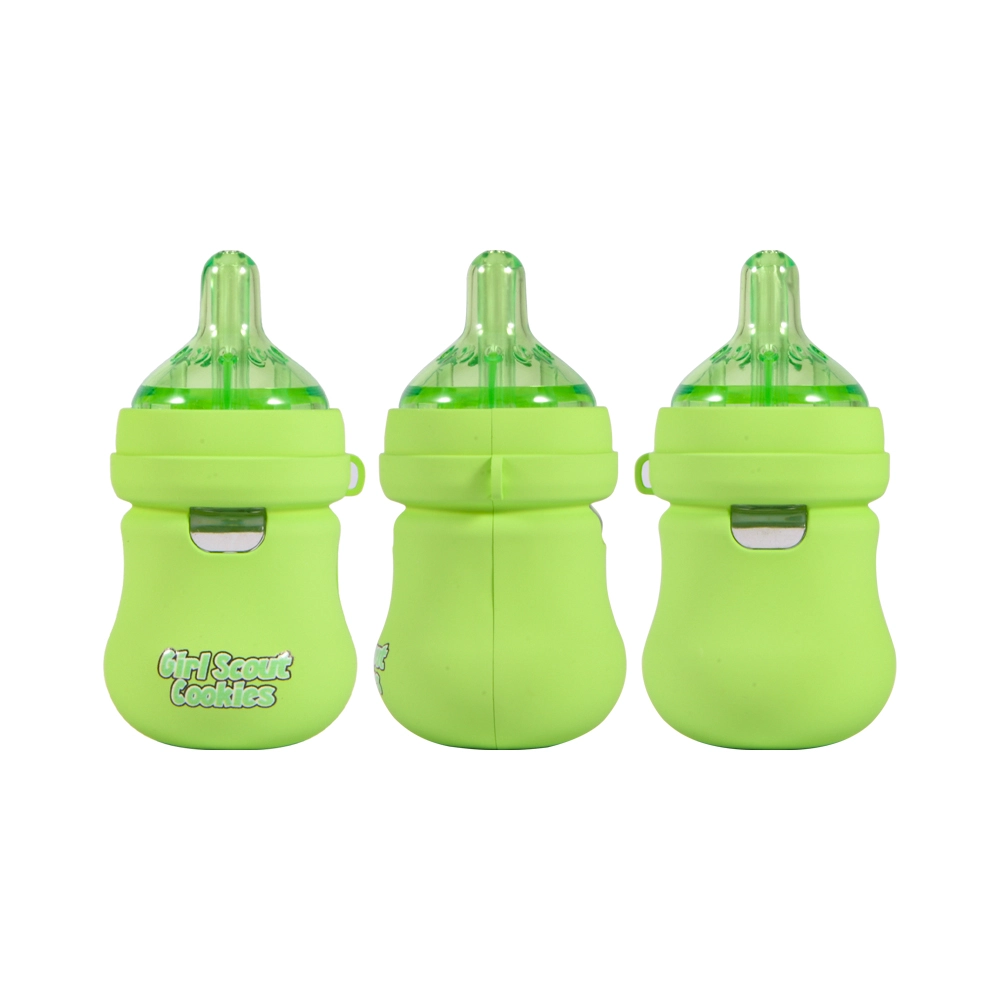
CryBaby 2g Baby Bottle Vape: B2B Wholesale Buying Guide (2026)
Audience: wholesalers, distributors, retailers, brand owners, and licensed operators sourcing adult-market vape hardware at scale.
Important: This is a sourcing and compliance-oriented buying guide. It is not legal advice. Only sell and distribute lawful products in lawful jurisdictions, and avoid youth-appealing marketing.
Why the CryBaby 2g “Baby Bottle” format matters for B2B buyers
The CryBaby 2g “baby bottle” silhouette is a high-visibility shelf format: it’s instantly recognizable, photo-friendly for compliant adult channels, and tends to stand out in crowded 2g assortments. For B2B buyers, however, the same novelty shape can increase compliance and reputational risk if your packaging or marketing could be interpreted as youth-appealing. That makes disciplined procurement—specs, documents, QC, and logistics—non-negotiable.
Start by confirming the exact SKU, charging method, and packaging details on the product page: CryBaby 2g vape bottle disposable pen.
Step 1: Lock the commercial spec (what you are really buying)
1) Hardware configuration checklist
- Capacity class: “2g” is a market class; confirm the supplier’s stated fill capacity (by mass/volume) and tolerance for your target oil viscosity.
- Charging interface: confirm port type (e.g., USB-C) and the included/required charging instructions.
- Core tech: heating element type, inlet/airflow design, anti-clog features, and any burn protection logic (if applicable).
- Materials: contact materials (tank, mouthpiece, seals), odor resistance, and compatibility with terpenes and common solvents used in cleaning/handling.
- Leak resistance: sealing method, gasket materials, pressure/altitude tolerance, and storage orientation guidance for your fulfillment flow.
- Branding surfaces: printable area, label curvature, and whether the bottle shape affects barcode scanning and carton packing density.
2) Packaging specification checklist (B2B critical)
- Carton configuration: units per inner box, boxes per master carton, and master carton dimensions.
- Protection: inserts/foam, anti-scratch bags, and drop-test expectations for your shipping lanes.
- Compliance-ready labeling: adult-only messaging, batch/lot fields, manufacturer/importer fields (where required), and space for jurisdictional warnings.
- Anti-counterfeit: serialization, holograms, QR verification, or tamper-evident seals (as appropriate for your market).
Step 2: Compare CryBaby against your 2g shortlist (and avoid spec drift)
Most wholesale problems happen when buyers compare “2g devices” as if they’re interchangeable. In practice, small deltas—airflow geometry, tank material, coil resistance, sealing, charging circuit quality—drive big deltas in return rates.
If you’re building a 2g portfolio (bottle + stick + dual chamber, etc.), benchmark CryBaby against the broader collection here: 2g disposable wholesale.
Use this simple side-by-side scorecard
| Category | What to ask / test | Pass criteria (example) |
|---|---|---|
| Charging & safety | Protection circuits, stable charging, heat behavior, port durability | No overheating; consistent charge acceptance; port survives handling |
| Leak & clog | Pressure/altitude behavior, seal integrity, storage orientation | Low leak rate in transit simulation; minimal clog complaints |
| Oil compatibility | Viscosity range, terpene % tolerance, wicking stability | Stable vaporization; no burning; minimal spitback |
| Receiving & QC | Lot marking, carton consistency, AQL readiness | Clear lot IDs; consistent counts; quick acceptance inspection |
| Brand risk | Packaging tone, youth-appeal risk controls, channel restrictions | Adult-oriented design; compliant warnings; strict age-gated distribution |
Step 3: Demand the right documents (this prevents customs, carrier, and marketplace failures)
A) Battery transport documentation (non-optional for reliable logistics)
Lithium batteries are regulated in transport. For smooth air/sea forwarding and fewer “mystery holds,” require:
- UN 38.3 test report (or equivalent proof of passing required transport tests).
- UN 38.3 test summary accessible for the supply chain upon request (common carrier/forwarder ask).
- MSDS / SDS where applicable for components and packaging materials used in shipping.
- Proper marks/labels on cartons when required by your mode (air/sea/ground) and battery configuration.
B) Electrical safety posture (reduce incident risk and liability)
Ask how the device’s charging/battery system is designed against common failure modes (overcharge protection, short protection, thermal behavior). While not every SKU will be certified, many buyers use recognized test programs and standards (e.g., UL 8139) as part of supplier qualification.
C) Commercial paperwork to prevent disputes
- Pro forma invoice + final invoice with consistent SKU naming.
- Packing list with exact counts and carton mapping.
- Warranty/DOA policy in writing (what counts as DOA, evidence required, replacement timing).
- Return/refund terms aligned with your acceptance testing window.
Step 4: Build a QC plan that matches wholesale reality
For “high-touch” novelty formats like a bottle silhouette, your QC plan should focus on what actually creates returns: charging failures, leaks, clogs, inconsistent airflow, and cosmetic damage that breaks shelf presentation.
Recommended incoming QC (fast but effective)
- Carton audit: verify carton count, crush damage, moisture exposure, and correct labels.
- Lot verification: record lot IDs and production dates (if provided), map to your receiving log.
- Sampling (AQL-style): pull a statistically meaningful sample per lot for:
- charge acceptance (spot-check several units per sample)
- draw resistance/airflow consistency
- basic leak check (visual + tissue test after controlled warm storage)
- cosmetic inspection (scratches, misprints, seal integrity)
- Document check: confirm battery transport docs are on file before re-shipping.
Preventive “design-to-receive” tips (B2B practical)
- Ask for photo/video of packing before shipment: inner packing, master carton, and labels.
- Require consistent variant labeling (if multiple finishes) to speed put-away and reduce picking errors.
- Use a golden sample (approved reference unit) for every re-order to avoid spec drift.
Step 5: Compliance and brand-risk controls (especially for “baby bottle” aesthetics)
Regulators and platforms have emphasized enforcement against unauthorized products and those that appear to appeal to youth. Novelty shapes and playful packaging increase scrutiny risk—so treat compliance as part of procurement, not a marketing afterthought.
Risk-reduction actions you can implement immediately
- Adult-only positioning: avoid cartoons, candy-like flavor imagery, or youth-coded themes on any packaging or listings.
- Channel discipline: sell only through compliant, age-verified channels and keep documentation for your buyer verification process.
- Jurisdictional labeling: build packaging templates that can swap warnings and required fields by state/country.
- Shipping reality check: carrier restrictions for vaping products can be strict; plan lanes early and use experienced forwarders for batteries.
Step 6: Pricing, MOQ, lead time, and Incoterms—how to negotiate without surprises
A strong wholesale buy is not just a low unit price—it’s a low total landed cost and a low return rate. When evaluating CryBaby 2g, align on these terms in writing:
- MOQ per SKU and whether mixed variants are allowed inside a master carton.
- Sample policy (paid/unpaid, shipping responsibility, lead time).
- Production lead time (and what triggers delays: packaging approvals, peak season, component supply).
- Incoterms (EXW/FOB/CIF/DDP) and exactly what’s included in “DDP” if offered.
- DOA/defect handling (credit vs reship, documentation, time window).
RFQ template: copy/paste this to get clean quotes fast
Send this checklist to your supplier to reduce back-and-forth and lock the spec:
- Product: CryBaby 2g bottle format
- Quantity: ____ units (include target monthly volume if reordering)
- Target markets: ____ (states/countries)
- Charging: confirm port type + included instructions
- Packaging: plain / branded / variant labels; box + master carton requirements
- Documents: UN 38.3 report + test summary availability; any electrical safety test info; invoices/packing list format
- QC: acceptance window; AQL target; defect definitions
- Shipping: preferred Incoterms; destination ZIP/country; preferred carrier/forwarder if any
Where to source related hardware (to build a stable 2g line)
If you need multiple 2g form factors (bottle + classic pen + screen variants), keep the buying process consistent across the portfolio. For broader selection and branding support, review: wholesale disposable vapes.
FAQ (B2B)
Should I buy CryBaby 2g based on photos alone?
No. For any novelty silhouette, order samples and run a minimal QC protocol (charging, airflow consistency, leak checks, packaging durability). Photos do not reveal seal quality or charging circuit behavior.
What’s the #1 cause of wholesale returns in 2g devices?
In practice it’s a mix of charging failures, leaks/clogs, and cosmetic damage from weak packaging. These are solvable with documentation, QC, and better packing specs.
How do I reduce compliance risk with a “baby bottle” shape?
Keep packaging and listings strictly adult-oriented, avoid playful/youth cues, and operate only in lawful, age-gated channels. Treat compliance as part of product design and procurement.
References (authoritative sources used for compliance & logistics)
- UL – E-cig & vape battery/electrical certification (UL 8139)
- PHMSA – Lithium battery test summaries (UN 38.3)
- ATF – PACT Act overview for vapes/e-cigarettes
- DLA Piper – USPS rule on nonmailability of vape products
- FDA – Advisory/enforcement actions for unauthorized tobacco products
- FDA – “Combating the Youth Vaping Epidemic” (policy/enforcement context)
- UL – UL 8139 recognized as an industry standard (context)
- Intertek – UN 38.3 testing overview (transport readiness)
- Reuters – USPS actions and enforcement environment (market context)
0 Comments